If you’re trying to lose weight, eating a healthy, portion-controlled diet that creates a calorie deficit is absolutely key — it may even be more important than working out. But if you’re eating right, adding exercise into your routine can absolutely burn extra calories and speed up the process. So which workout should you be doing?
To maximize your exercise time, we asked fitness instructor John Kersbergen what the best workout for weight loss is, and the answer may surprise you. It’s not tons and tons of calorie-burning, steady-state cardio like running straight for an hour. He said, “The most efficient way to get results is to do some form of high-intensity interval training (HIIT) for a total-body workout and to focus on strength training certain body parts (upper body, lower body, core) on different days of the week.” And no need to suffer for hours at the gym. John said, “The whole workout including warmup doesn’t need to be more than 45 minutes to be effective.” And three to four times a week is enough.
Here’s an example of a week’s worth of workouts.
Monday: total-body HIIT + lower body Tuesday: total-body HIIT + upper body Wednesday: rest Thursday: total-body HIIT + abs and back Friday: total-body HIIT + whatever else you want to focus on for your goals Saturday: rest Sunday: active rest such as going for an easy hike or yoga
For HIIT, basically you follow a work-to-rest ratio, and a popular one is 2:1. That could be 40 seconds of working at 70 to 90 percent of your max followed by 20 seconds of rest. An example of HIIT could be running, biking, jumping rope, rowing, or swimming with sprint or hill intervals included, and/or a mix of strength-training moves like burpees, squats, plyometrics exercises like jumping lunges, or push-ups.
Here are some HIIT workouts to give you some ideas.
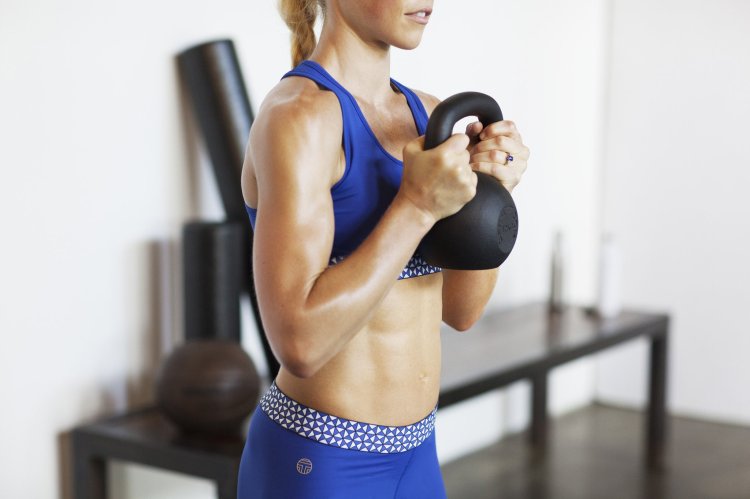
Make sure your HIIT workout includes strength training, so don’t just do a 45-minute running interval workout and call it a day. Bodyweight exercises could be enough — like squats, for example — but adding weights will get results faster, like doing goblet squats holding a kettlebell.
John said, “Get as much work done in as short amount of time, each time, with mostly total-body compound movements that recruit more muscles and burn more calories.” So instead of just standing while doing bicep curls, couple it with a wide squat. Other examples of effective strength-training moves include squat variations like jumping squats, weighted squats, and dumbbell thrusters, as well as deadlifts, weighted step-ups, push-ups, pull-ups, and plank variations such as up-down planks and side planks with leg lifts.
Each total-body HIIT workout should work multiple muscle groups, so it’s not like Monday will be the only day you work your legs. But focusing on one part of the body on a specific day is an opportunity to add weight or reps so you can gradually increase your strength and endurance for those muscles. It’s also a chance to give certain parts of the body time to rest and repair, which will build muscle faster and prevent injury.
If weight loss is your goal, this should be great news! No more forcing yourself to do hours upon hours of boring cardio. If you’re new to HIIT, start with 10 minutes of short bursts of intense, heart-pumping intervals and muscle-burning strength-training moves. Then work your way up to 45-minute workouts three to four times a week. Mix up the exercises you do, the body parts you work, the equipment you use, and the order you do the exercises. It’ll keep your muscles guessing, prevent boredom, and build the most muscle, which will help burn the most fat. Most importantly, it’ll keep you inspired to work out, so you’ll be consistent with your weekly workouts, which is the key to seeing results and reaching your goal.
Image Source: POPSUGAR Photography / Rima Brindamour
ANY AESTHETIC GOAL typically comes to doing one of two things: burning fat or building muscle. If you’re really dedicated, the path to achieve both simultaneously is called body recomposition.
It’s a feat many have considered to be near impossible, since the two goals require different demands. To lose fat, you need to burn more calories than you consume. To buildmuscle, you need to train hard and eat enough protein for your body to build muscle fibers.
Still, there are too many myths that can leave you confused about how exactly you should attack a body recomposition journey.
1. Don’t Go Crazy with HIIT
HIIT, OR HIGH intensity interval training, might sound like the ideal workout to blast calories while still building muscle. Doing too much of this high-octane protocol, however, can eat into your strength training plan. Doing HIIT properly means putting maximum energy into short bursts of work—and maximum effort workouts require sufficient rest time to recuperate.
HIIT sessions can fry your central nervous system, and that will limit how often you can train, period.
A solid HIIT session will take two to three days to recover from, which means you’ll miss out on essential training days to get the proper rest you need. If you return too quickly after a HIIT session, you’re putting yourself at risk of injury. If you don’t need the recovery, you didn’t go hard enough during your HIIT workout.
Plus, HIIT is simply less effective than you would want from a muscle building standpoint. You lose out on the amount of time under tension you need to truly drive muscle growth.
DO THIS INTEAD:
Build in small doses of HIIT into the end of your strength workouts
HIIT is still a good workout to challenge your other energy systems. You just need to make sure you’re incorporating it in a smart way.
To get the benefits of HIIT, you don’t need to be doing hours of it. A shorter period, say seven to 10 minutes, will be enough to get you what you need from it. Limit these workouts to twice per week. This will allow you to ramp up your heart rate without crushing your body, so it won’t prevent you from truly building muscle which is half of your body recomp goal.
2. Don’t Neglect Serious Weight Training
SINCE YOU’LL BE focused mostly on muscle and how you look flexing in the mirror, lots of people often don’t take their training as seriously when it comes to building strength. They’ll swap the heavy weights for more reps to focus on a pump—and that won’t help you get the body you want.
We tend to think of reps as the key to building muscle, and those tend to come best when we train with lighter weights. The thing is, those lighter weights don’t truly build strength, and that’s going to curtail your ability to build muscle long term.
To build muscle, you’re going to need to progressively overload. Counter to more traditional thinking, recent research has shown that the rep range to build muscle can be as low as three reps per set—as long as you are being challenged by the load.
DO THIS INSTEAD:
Start every workout with a heavy load exercise
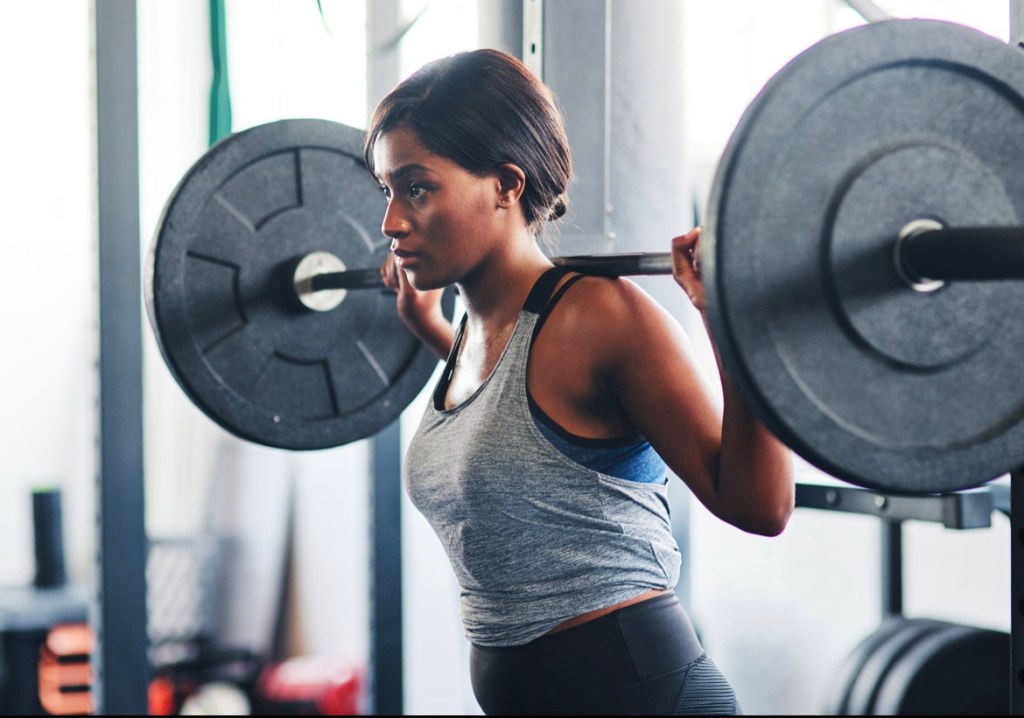
Begin every one of your strength workouts with a multi-joint, like a squat, deadlift, or bench press. Think about doing three sets of three to five reps with a heavy load.
3. Don’t Over-Focus on Ab Training
ONE SADLY COMMON misconception in fitness is that ab exercises will help you shed weight in your midsection. That’s known as spot training, and it doesn’t exist. You can build muscle in your core, but you don’t get to chose exactly where you’ll lose fat on your body.
To actually shed fat, you need to burn calories. Big calorie burn will come from exercises that incorporate several muscles groups at once, not just training your abs. Compound movements like squats and deadlifts will give a bigger return in calorie burn than isolated ab exercises.
DO THIS INSTEAD:
Pick One Smart Ab Exercise
You only really need to be dedicating three to four sets of your workout to an ab exercise. And, when selecting one, make sure its something that you can progressively overload. Think hanging leg raises, cable crunches, or split stance chops. These movements can be challenged more over time, and incorporate more of your body than just your abs. If you can do 50 to 100 reps of an ab exercise, pass on it. Focus on moves (and loads) that limit you to eight to 10 reps.
4. Don’t Fear the Total Body Workout
YOU MIGHT ASSOCIATE muscle building with the bodybuilder’s workout split, which dictates that you should train a different muscle group every single day of the week. This can be effective over a longer period of time, but only if you program correctly and train incredibly hard every day.
The strategy of the split lies in the idea that you attack one muscle group so hard that it needs the full week’s worth of rest before you train that body part again. But that truth is, most people just aren’t going that hard.
The other downfall of the bodybuilder split is that “it prevents you from getting the muscle building and calorie burning responses that come with total body sessions,” Samuel says. That happens when you’re moving “more weight, and simply doing more work, because you’re using more joints.”
DO THIS INSTEAD:
Incorporate Full-Body Workouts
If you’re only working out three times per week, consider doing full-body workouts. You’ll hit all your major muscle groups while still burning calories. This structure will also provide you opportunity to progressively overload, which is what sparks muscle growth.
If you aren’t doing compound exercises in your routine, it’s about time you hop on the bandwagon. According to Caley Crawford, NASM-CPT and director of training and experience for Row House, the beauty of compound exercises is that they allow you to complete a productive, effective workout where you’re doing “more work in less time.” Thanks to Crawford, we have some pretty stellar compound exercises that burn more fat so you make the most of your fitness sessions.
“[Compound exercises train] your muscles to work together which will translate to be more functional in your everyday life,” Crawford explains. “You’ll activate more muscles at once, which will not only build strength, but it also trains your heart more efficiently. When more muscles are working, it requires more oxygen, which means your heart has to work harder so you’ll see more cardiovascular benefits, sooner. More muscles activated also correlates to more muscles growing and building strength which results in higher caloric, and fat burn.”
If you’re looking to speed up the fat burn, Crawford offers five compound—and/or “large muscle group”—exercises that totally trump traditional isolated exercises like tricep extensions and bicep curls. Keep reading to learn all about them.
DUMBBELL THRUSTER
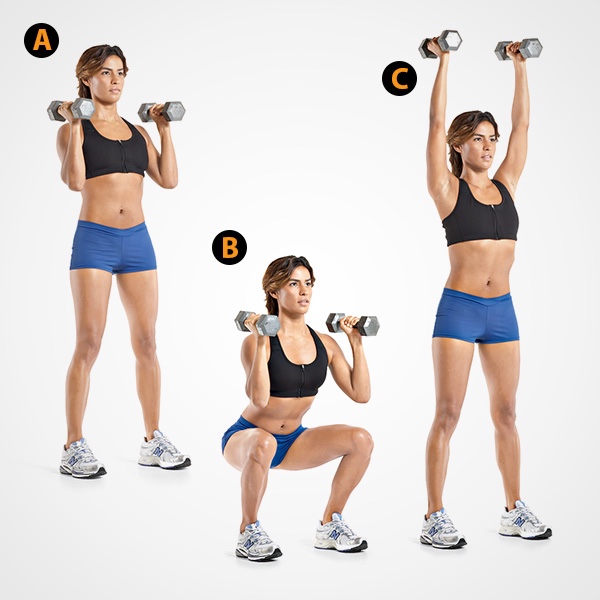
This exercise is a total-body movement compounding an overhead press with a squat. Crawford favors dumbbell thrusters over barbell thrusters because the dumbbells establish more instability that really activates the stabilizers in your shoulders. Gear up to work your core, lower body, and upper body at the same time.
To set up, Crawford instructs you to position your feet shoulder-width distance apart, and have a dumbbell in each hand. The weights should be held in a “front rack hold,” meaning the head of the dumbbells should be gently resting on your shoulders. Then, lower into a squat by hinging your hips back, bending both knees, and lowering your hips until your thighs reach a parallel position to the floor.
Crawford continues to explain, “As you rise up from the squat, use the momentum from your legs to push the weight above your head. Straighten your arms fully overhead and hold the weight in a stable position for a second. Lower the weight back to your shoulders (front rack position), and then immediately begin another squat, repeating the process.”
MAN MAKER or “HUMAN MAKER”
The man maker, or what Crawford likes to call the “human maker,” is another total-body move that mainly targets your shoulders, chest, core, and triceps. It can also activate your quads, glutes, and hamstrings.
To set up, start in a high plank position. Your hands should be on a set of dumbbells that are placed shoulder-width distance apart.
First, complete a renegade row by raising one of the weights up to meet your ribcage, making sure your hips and shoulders remain square to the ground. Switch between your left and right sides.
Then, it’s time for a pushup. Complete one pushup while holding the weights. For extra points, try to perform a “deficit pushup” by lowering your chest all the way to the floor.
Next, you’ll do a dumbbell clean. Bring your feet in closer to your hands, and explosively bring the dumbbells up to each shoulder, making sure they form a front rack position.
Now, complete a front squat by bringing your hips down until they reach a parallel position to the floor, making sure your body weight remains in both heels. The dumbbells should be in a front rack position once again.
Lastly, wrap up the exercise with an overhead press. Straighten out your legs and bring the dumbbells above your head until your arms are totally straight. If the weight of the dumbbells is too heavy, feel free to utilize the force from your legs to raise the weights.
Bring the dumbbells back to your shoulders, then lower them to each side of your body. Put them on the floor, step back, and repeat this exercise for as many reps as you’re aiming for.
“The man maker exercise can be quite challenging, so it is important to start with lighter weights and focus on proper form before progressing to heavier weights,” Crawford explains. “It is also important to warm up properly before attempting the exercise, and to modify or regress the exercise as needed based on your fitness level and experience.”
A classic pushup is an amazing total-body exercise that calls for complete activation of your core. This move also works your triceps, chest, and posterior chain.
“I highly suggest doing hand-release pushups to start to ensure you can maximize your range of motion—this will target more muscles and build strength faster,” Crawford says.
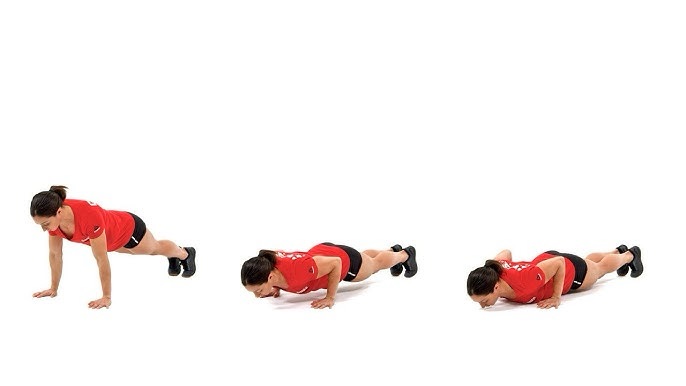
Begin by assuming a high plank with your hands placed a bit outside shoulder-width. Your feet should be together, and your body should form a straight line from your head to your heels. Activate your glutes and core, and keep your neck neutral. Then, lower your body to the floor by bending at your elbows. Push back up to the position you started in, totally straightening your arms.
“One tip is to make sure your chest hits the ground before the hips do. Modify as needed using your knees or a wall,” Crawford adds.
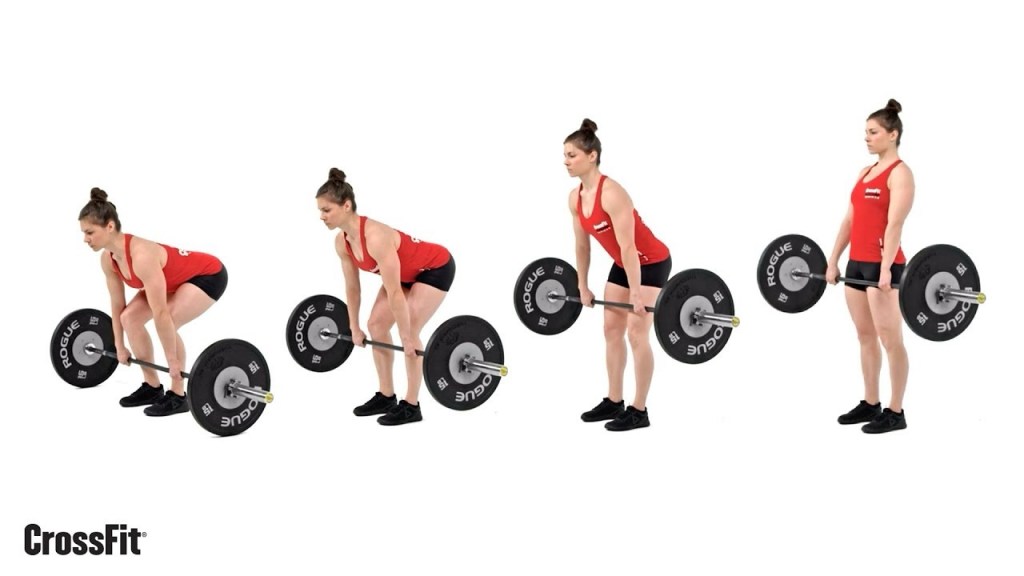
“The deadlift is the strongest lift we can do. This is going to activate the glutes, hamstrings, and entire posterior chain as well as your core,” Crawford tells us.
Start off by positioning your feet shoulder-width distance apart and standing up tall. Point your toes forward. Put the barbell, kettlebell, or dumbbells on the floor in front of your body. Stand close enough to the weight so that your shins touch it. Hinge your hips back, and, using an overhand grip, grab the weight by placing your hands shoulder-width distance apart.
Crawford continues, “Lower your hips by bending your knees slightly and bring your chest up so that your back is straight and your chest is facing forward. Take a deep breath, brace your core, and lift the bar off the ground by pushing through your heels. Keep the bar close to your body as you stand up straight, keeping your chest lifted and your back flat. Exhale at the top of the lift, and then lower the bar back down to the ground with control, making sure to keep your back straight and your hips back.”
As far as Crawford’s pro tips for this exercise are concerned, she says to make sure your back remains straight during the lift to avoid potential injury. Activate your lats, glutes, and core to give your lower back support. In addition, keep the barbell (or weights you’re working with) close to your shins during the lifting motion to ensure you stay balanced. And lastly, gain momentum through your heels in order to lift the weight.
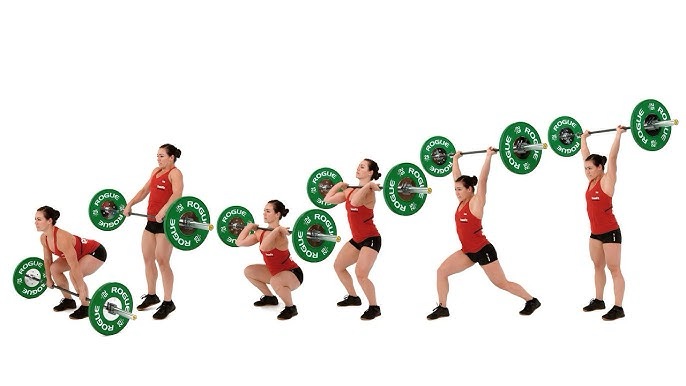
Last but not least in our roundup of compound exercises that burn more fat is the clean and jerk. Begin by standing tall, and place your feet shoulder-width distance apart. Your toes should point forward. Place the barbell in front of your body. Use a wider overhand grip than if you were performing a deadlift. When it comes to this particular lift, Crawford says you’ll usually assume a “hook grip,” where “your thumb is under your fingers when wrapped around the bar.”
Then, bend your knees and lower your hips, making sure your chest stays lifted and your back straight, in order to grip the bar. As you extend your knees and your hips, bring the bar up to your thighs. Keep your shoulders over the weight. When the bar is up to your thighs, shrug both shoulders, and utilize your hips explosively to drive the bar upward. Once the barbell is at its highest possible point, drop under it in a speedy fashion, positioning your elbows around and underneath the bar to “catch it” at the level of your shoulders.
Crawford continues, “Once you catch the bar, stand up with it, keeping your core tight and your back straight. From this position, dip your knees slightly, and drive the bar upwards, using the power from your legs to push the bar overhead. As the bar reaches its highest point, quickly move your feet into a split stance, with one foot forward and one foot back, to help stabilize yourself. Once you’re in the split stance, fully extend your arms overhead to lock out the weight. Then, stand up with the weight pressed overhead. Always step the front foot in first, then the back foot. Lower the weight back down to your shoulders, and then slowly lower it to the ground.”
Crawford dubs this exercise a “true Olympic lift” that needs good form. A trainer or coach should be watching over you as you perform this move in order to make sure you’re doing it correctly. Begin with a light weight, then go from there.
The Benefits of Intermittent Fasting: A Guide to Better Health
Intermittent fasting (IF) has become a popular health trend for those looking to improve their well-being, manage weight, and enhance energy levels. Here are some of the key benefits:
1. Supports Weight Loss
Intermittent fasting helps reduce calorie intake by limiting eating to specific windows of time.
It can improve metabolism and encourage the body to burn fat for energy, aiding in weight loss.
2. Improves Metabolic Health
IF can lower insulin levels and increase insulin sensitivity, reducing the risk of type 2 diabetes.
It helps regulate blood sugar levels, making it a great tool for managing energy and preventing spikes.
3. Boosts Cellular Repair
During fasting, the body activates cellular repair processes like autophagy, where damaged cells are removed.
This may contribute to anti-aging benefits and improved cellular function.
4. Enhances Brain Health
Studies suggest fasting can increase brain-derived neurotrophic factor (BDNF), a protein linked to improved brain function.
It may also reduce oxidative stress and inflammation, which are associated with cognitive decline.
5. Promotes Heart Health
Fasting can help lower risk factors for heart disease, including blood pressure, cholesterol levels, and triglycerides.
6. Simplifies Meal Planning
With fewer meals to prepare, intermittent fasting can save time and simplify daily routines.
This structure can make it easier to stick to a healthy eating plan.
7. May Extend Longevity
Animal studies show that fasting can increase lifespan, possibly due to improved cellular health and reduced inflammation.
How to Get Started
Intermittent fasting can take many forms, such as the 16/8 method (16-hour fast, 8-hour eating window) or alternate-day fasting. Start gradually and consult a healthcare provider if you have any medical conditions to ensure it’s safe for you.
Final Thoughts
Intermittent fasting is more than just a trend—it’s a lifestyle that can offer numerous health benefits. By giving your body time to reset and repair, you might find not only a slimmer waistline but also a healthier, more energized you!
As we age, our bodies undergo a range of physiological changes that can impact our health, mobility, and overall quality of life. For individuals over the age of 30, strength training emerges as an essential component of a balanced fitness routine.
In this article, we’ll delve into ten compelling reasons why strength training is a must for people over 30, backed by scientific evidence and research. Whether you’re just starting or looking to enhance your existing fitness regimen, understanding the benefits of strength training can be a game-changer for your long-term health.
1. Prevention of Age-Related Muscle Loss (Sarcopenia)
Sarcopenia, the age-related loss of muscle mass and strength, typically begins around the age of 30 and accelerates with each passing decade. This decline in muscle mass can significantly impact daily functioning, increasing the risk of falls, fractures, and general frailty.
Research Insight: A study published in the journal Current Opinion in Clinical Nutrition and Metabolic Care highlights that muscle mass declines by approximately 3–8% per decade after the age of 30, and this rate of decline is even higher after the age of 60 (Janssen et al., 2002). Strength training is one of the most effective interventions to combat sarcopenia by stimulating muscle protein synthesis and preserving muscle mass.
2. Increased Metabolic Rate
As we age, our metabolism naturally slows down, leading to an increased likelihood of weight gain and difficulty in losing fat. Strength training helps to counteract this by boosting your resting metabolic rate (RMR).
Research Insight: A study in the Journal of Applied Physiology found that strength training can increase RMR by up to 7% after several months of consistent training (Campbell et al., 1994). This increase in metabolism is due to the fact that muscle tissue burns more calories at rest compared to fat tissue. By reducing increasing muscle mass through strength training, your body becomes more efficient at burning calories, even when you’re not exercising.
3. Enhanced Bone Density
Osteoporosisand low bone density are common concerns as we age, particularly among women. Strength training applies stress to bones through resistance exercises, stimulating bone-forming cells and enhancing bone density.
Research Insight: A landmark study published in the Journal of Bone and Mineral Research demonstrated that postmenopausal women who engaged in resistance training experienced significant increases in bone mineral density compared to those who did not (Nelson et al., 1994). This improvement in bone density is crucial for reducing the risk of fractures and maintaining overall bone health.
4. Improved Insulin Sensitivity and Blood Sugar Control
As we age, our risk of developing insulin resistance and type 2 diabetes increases. Strength training can improve insulin sensitivity, helping the body use glucose more effectively and reducing blood sugar levels.
Research Insight: The Journal of Gerontology published a study that found older adults who engaged in regular strength training exhibited improved insulin sensitivity and better blood glucose control (Miller et al., 1994). This can be particularly beneficial in preventing or managing type 2 diabetes.
5. Better Cardiovascular Health
While cardio exercise is often highlighted for heart health, strength training also plays a significant role in improving cardiovascular function. Regular resistance training has been shown to lower blood pressure, improve cholesterol levels, and reduce the risk of heart disease.
Research Insight: According to a study in the Journal of Strength and Conditioning Research, participants who engaged in strength training showed reductions in both systolic and diastolic blood pressure, as well as improvements in blood lipid profiles (Kelley & Kelley, 2000). These changes contribute to a lower risk of cardiovascular diseases, which are a leading cause of mortality worldwide.
6. Maintenance of Mobility and Flexibility
Contrary to the misconception that strength training leads to muscle stiffness, it actually enhances joint flexibility and mobility, especially when performed through a full range of motion. Maintaining mobility is crucial for daily activities and reducing the risk of injury.
Research Insight: A study in the Journal of Aging and Physical Activity found that older adults who participated in strength training experienced improved joint mobility and overall functional movement (Seguin & Nelson, 2003). The combination of strength and flexibility training can keep you agile and capable as you age.
7. Mental Health and Cognitive Function
The benefits of strength training extend beyond physical health; they also encompass mental well-being. Strength training has been linked to improvements in mood, reduction in symptoms of anxiety and depression, and enhanced cognitive function.
Research Insight: The American Journal of Lifestyle Medicine published a review indicating that strength training can lead to significant improvements in cognitive function and reductions in depressive symptoms in older adults (Liu-Ambrose et al., 2010). The cognitive benefits are thought to arise from increased blood flow to the brain and the release of endorphins during exercise.
8. Reduced Risk of Injury
Strength training strengthens not just muscles, but also tendons, ligaments, and connective tissue, all of which contribute to better joint stability and reduced risk of injury. Stronger muscles and joints provide better support during physical activities, helping to prevent common injuries like sprains, strains, and falls.
Research Insight: A study in the British Journal of Sports Medicine found that strength training reduces sports injuries by about 33% and overuse injuries by almost 50% (Lauersen et al., 2014). This protective effect is crucial for maintaining an active lifestyle without being sidelined by injuries.
9. Enhanced Posture and Balance
Poor posture and balance issues are common complaints as people age, often due to muscle imbalances and weakened core muscles. Strength training, particularly exercises targeting the core and lower body, can significantly improve posture and balance, reducing the risk of falls and improving overall stability.
Research Insight: Research published in the Journal of Strength and Conditioning Research shows that strength training exercises that target the core and lower body muscles can improve balance and posture in older adults (Granacher et al., 2013). This improvement is vital for preventing falls, which are a leading cause of injury in older adults.
10. Long-Term Independence and Quality of Life
Perhaps the most compelling reason to engage in strength training is its impact on long-term independence and quality of life. Maintaining strength, mobility, and functional capacity allows older adults to live independently, perform daily tasks with ease, and enjoy a higher quality of life.
Research Insight: A study published in The Journals of Gerontology found that older adults who regularly engaged in strength training were more likely to maintain their independence and had a higher quality of life compared to those who were inactive (Rantanen et al., 1999). The ability to live independently is closely tied to physical strength and functional capacity, both of which can be preserved through regular strength training.
Conclusion
Strength training is not just for bodybuilders or athletes; it is an essential practice for anyone over the age of 30 who wants to maintain their health, mobility, and quality of life as they age. From preventing muscle loss and boosting metabolism to enhancing mental health and reducing the risk of injury, the benefits of strength training are extensive and well-supported by scientific research. Incorporating strength training into your fitness routine can lead to profound improvements in your physical and mental well-being, allowing you to enjoy a vibrant, active life well into your later years.
Just like the number on the scale, your body fat percentage is just one factor in the overall picture of your health. Paying attention to how much energy you have, how your clothes fit, your food quality and mental health are just as important to pay attention to on your journey.
That said, lowering your body fat percentage might help you achieve the lean look you’re going for, and may also increase your energy, performance and confidence.
Keep reading for the 5 best strategies for lowering your body fat percentage …
1. Eat at a calorie deficit and hit your macros consistently.
Losing weight requires a calorie deficit.
Getting specific about losing fat mass (and not muscle mass) requires getting specific about what your calories are made of. Prioritize hitting your protein, carb and fat targets consistently to achieve a regular calorie deficit while also maintaining muscle mass to lower your total body fat percentage.
2. Lift weights.
Regular strength training can help you maintain and build muscle mass while you lose fat. And compared to other types of exercise, strength training has a higher excess post-exercise oxygen consumption, or EPOC. This means that your metabolism may stay higher for longer after weightlifting, so you can burn more calories even after your workout is over.
3. Try high-intensity interval training (HIIT).
HIIT involves alternating short bursts of high intensity exercise with slightly longer periods of low intensity exercise. Research shows that HIIT can increase your metabolic rate and reduce both subcutaneous fat and belly fat better than other types of exercise, including moderate-intensity training and aerobic exercise.
4. Manage your stress level.
It’s not all about diet and exercise. Your mental health and the way you handle stress can also impact your body composition. When you’re stressed out all the time, the amount of cortisol in your blood increases, which can make you store more body fat. While it’s impossible to get rid of stress completely, you can become more resilient to the effects by regularly practicing things like yoga, meditation and deep breathing exercises.
5. Get enough sleep
Lack of sleep negatively impacts several hormones related to body composition – it can cause a spike in cortisol, increase ghrelin (which signals hunger) and decrease leptin (which signals fullness.) If that’s not enough, you’re more likely to move a lot less throughout the day after a poor night of sleep.
Sleeping on a regular schedule and focusing on a high quality sleep environment plays an imperative role in body composition.
Want to transform your body? Go grab a pair of dumbbells and set aside some time to complete just three workouts a week
PHA training involves pairing upper body and lower body movements, back to back, forcing your heart to work double time to pump blood back and forth, from top to bottom. This method of increasing blood flow and circulation by rapidly shifting between different muscle groups results in huge benefits, such as:
Increased strength and performance through extended, localised, rest periods
Improved cardiovascular conditioning
Increased calorie burn and enhanced metabolic rate
Improved muscular endurance
Enhanced circulation
How Peripheral Heart Action Training Works
Each workout will be separated into two or three, ten minute blocks, with each block containing an upper body and lower body movement. Your goal is to perform as many high quality rounds of each pairing as possible before the ten minute mark. Make a note of the total reps you managed for each movement.
DAY ONE
After a thorough warm-up, grab your dumbbells, set a countdown timer for 10 minutes and get to work on your first ‘block’, working your way through as many high quality rounds as possible. Rest as necessary to keep your form on point, but push yourself hard if you want to see results. At the end of each round, make a note of how many reps you performed for each movement. Rest for 3-4 minutes before moving into blocks 2 and 3 respectively.
Block 1 (10 minutes) :
A. Push Press x8-12
Clean your dumbbells onto your shoulders, palms facing in. Take a breath and create tension in your core. (A) Dip at the knees and use your legs to help (B) press your dumbbells overhead. Lower with a controlled tempo to your shoulders and repeat. If your weights feel a little too light, don’t use any drive from the legs and focus on a strict press from the shoulders.
B. Alternating Reverse Lunge x20-30 (total)
Stand tall with dumbbells at your sides (A), this time take a step backwards with one leg, bending the at the knee until the back knee gently touches the ground (B). Stand up explosively, pause and repeat with the opposite leg. Alternate back and forth, aiming for 20-30 total reps, counting both legs.
Block 2 (10 minutes) :
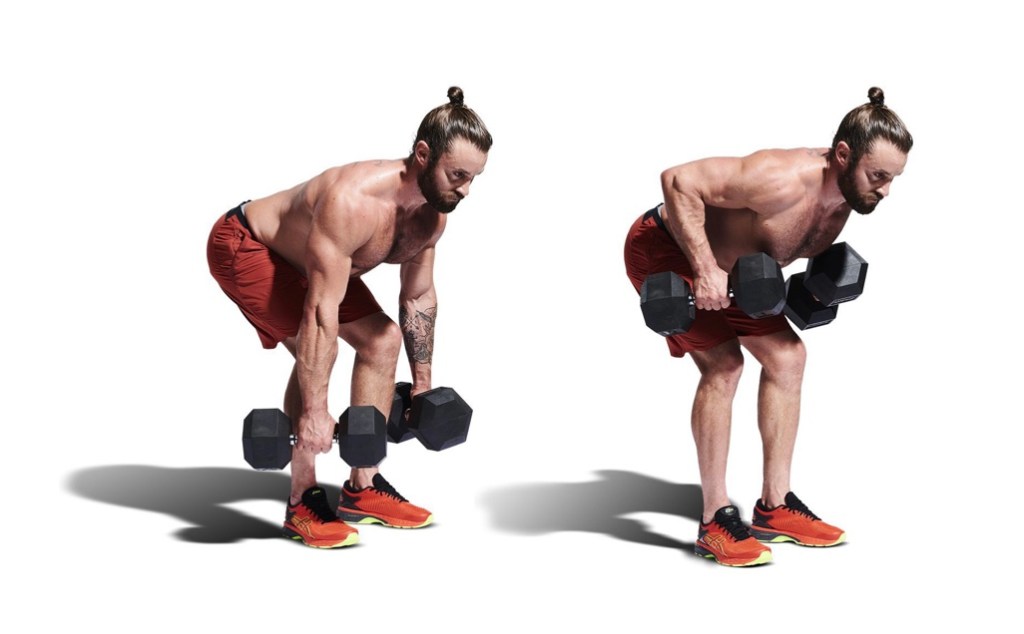
A. Bent-Over Row x8-12
Stand tall with your dumbbells at your sides, hinge forward until your torso is almost parallel to the ground and allow the dumbbells to hang just below your knees (A). Maintaining a flat back, row both dumbbells towards your hips (B), squeeze your shoulder blades together and lower under control to the start before repeating.
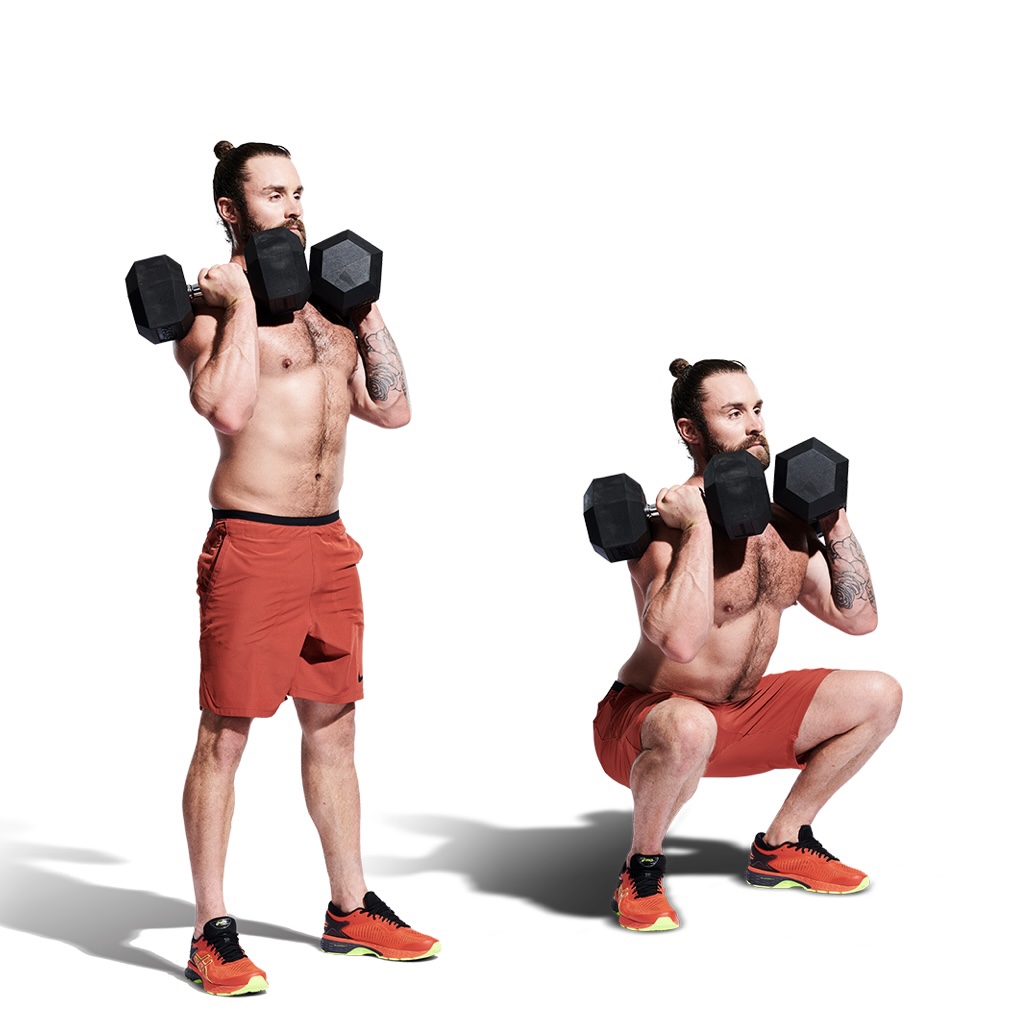
B. Front Squat x12-15
Clean your dumbbells onto the front of your shoulders (A). From here, drop into a front squat, by pushing your hips back and bending at the knees until your thighs pass parallel to the ground (B), before driving back up explosively. Keep those dumbbells secured high, with a strong, upright torso throughout.
Block 3 (10 minutes) :
A. Push-Up on Dumbbells x10
Assume a long arm plank position, with your core tight and, hands below your shoulders stacked on top of your dumbbells (A), bend your elbows to bring your chest to the floor (B). Keep your elbows close to your body as you push back up explosively.
B. Air Squat x20
Standing tall with your chest up (A), sink your hips back, bending your knees to drop your thighs until you reach a deep squat (B). Drive back up explosively and repeat. Keep a controlled tempo and tight form, but don’t dawdle. These may be simple, but they shouldn’t be easy.
You don’t have to do cardio for weight loss, resistance training as effective
Strength training can help you burn fat and lose weight as effectively as cardio, new research suggests.
The key to losing weight is a calorie deficit, or eating less than you burn, experts say.
Lifting weights and other strength exercise can help keep your metabolism high by building muscle too.
Strength training can be an effective way to lose weight, new research suggests.
Resistance exercise like lifting weights, in combination with a calorie deficit, helps burn fat and reduce body fat percentage, according to a study published April 11 in Obesity Reviews.
Researchers from Edith Cowen University in Australia and the University of Caxias do Sul in Brazil analyzed data from 4184 total participants across 116 published studies on exercise and weight loss to find out if resistance training like lifting weights might aid weight loss.
They found that combining resistance training with calorie reduction was an effective weight loss strategy, leading to an average of 12 pounds of weight loss.
The findings debunk the myth cardio exercises like running or HIIT are the only way to lose weight, according to Pedro Lopez, lead researcher and PhD student at Edith Cowen University.
“Usually when we talk about obesity, body composition or weight loss, we only hear about aerobic exercise,” he said in a press release.
The research could help provide an alternative to cardio exercise like running, which can stress the knees and other joints, so more people can benefit from exercise, including people with obesity looking to lose weight, Lopez said.
For weight loss, a calorie deficit is key
A caveat to the research, however, is that exercise alone may not help with weight loss without proper nutrition.
Weight loss in the study was tied to a calorie deficit, or eating fewer calories on average than you burn off with exercise.
“If you want to lose weight, you have to reduce your calorie intake,” Lopez said.
Experts say that while a calorie deficit is essential for weight loss and fat burning, methods of creating a calorie deficit can vary. Strategies to cut calories include tracking what you eat, reducing portion sizes, adding more high-volume foods like veggies, or trying a diet that helps you eat less by other means such as low carb or intermittent fasting.
A calorie deficit can also come from adding more physical activity to your day, from walking to gym sessions, although exercise alone is rarely enough for long-term weight loss, previous research suggests.
Lifting weights also helps build muscle, which can rev up metabolism
The most recent study also found resistance training was most effective for building muscle, as well as maintaining muscle during weight loss.
Typically when people seek to lose weight, the goal is to lose body fat, not lean mass such as muscle. Muscle tissue is important not just for strength and athleticism, but also metabolic health.
The more muscle you have, the more calories you burn, which means weight lifting is a great way to build your metabolism over time, according to personal trainers. It’s also a myth that weight lifting makes you bulky without trying, since muscle takes time and effort to build.
Other evidence-based benefits of strength training include a stronger heart and joints, more confidence and better body image, and lower risk of illnesses like cancer and heart disease.
You don’t have to be a gym rat to get started with dumbbells, barbells or kettle bells, either — you can learn to lift weights even without prior strength training experience, according to personal trainers.
No matter what equipment you use, strength training exercises can be scaled to your experience and skill, so you can make the most of your workouts regardless of your fitness level.
You can also start strength training with bodyweight exercises like pull-ups, push-ups, and squats, no gym required.
Intermittent fasting is an eating pattern where people limit their food consumption to certain hours of the day. Some research suggests that it may have benefits beyond weight loss, like improved brain and heart health.
Intermittent fasting (IF) is currently one of the world’s most popular health and fitness trends.
People are using it to lose weight, improve their health and simplify their lifestyles.
Many studies show that it can have powerful effects on your body and brain and may even help you live longer.
This is the ultimate beginner’s guide to intermittent fasting.
What Is Intermittent Fasting (IF)?
Intermittent fasting (IF) is an eating pattern that cycles between periods of fasting and eating.
It doesn’t specify which foods you should eat but rather when you should eat them.
In this respect, it’s not a diet in the conventional sense but more accurately described as an eating pattern.
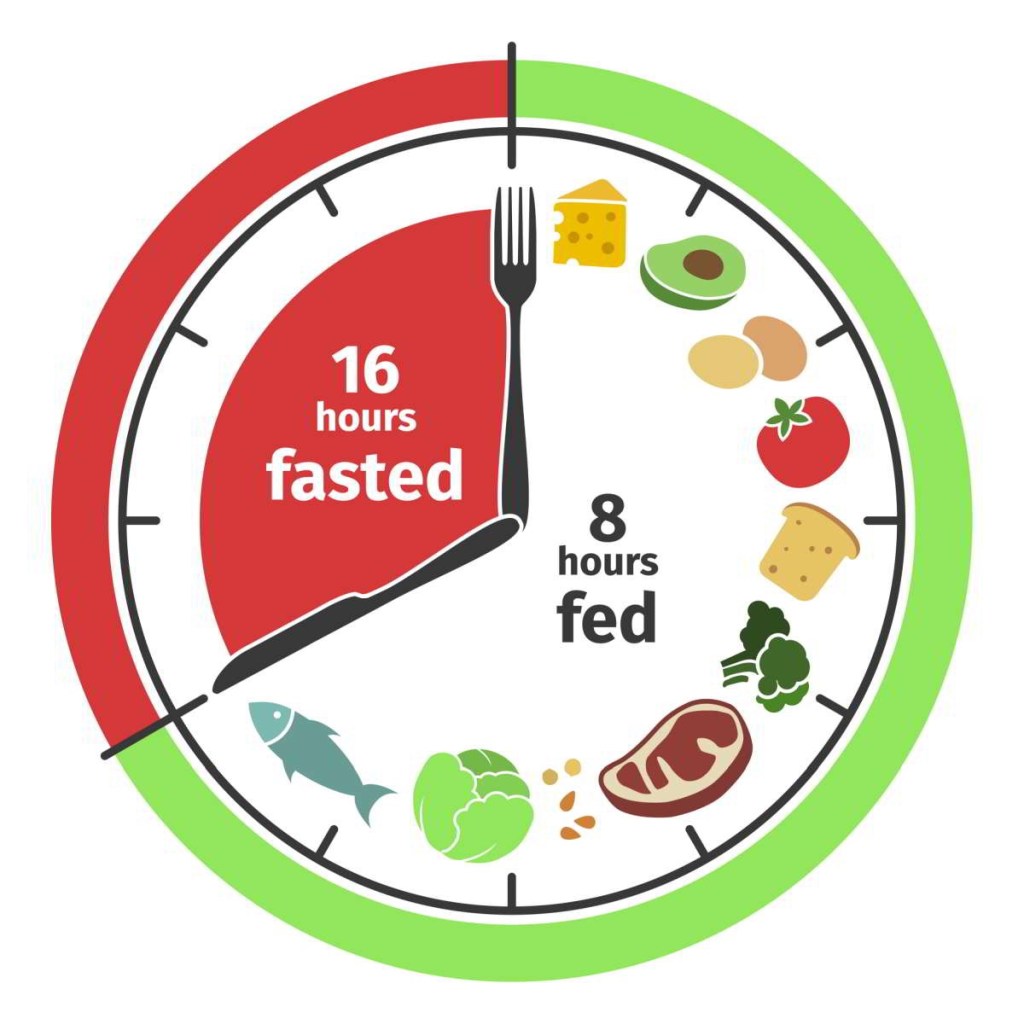
Common intermittent fasting methods involve daily 16-hour fasts or fasting for 24 hours, twice per week.
Fasting has been a practice throughout human evolution. Ancient hunter-gatherers didn’t have supermarkets, refrigerators or food available year-round. Sometimes they couldn’t find anything to eat.
As a result, humans evolved to be able to function without food for extended periods of time.
In fact, fasting from time to time is more natural than always eating 3–4 (or more) meals per day.
Intermittent Fasting Methods
There are several different ways of doing intermittent fasting — all of which involve splitting the day or week into eating and fasting periods.
During the fasting periods, you eat either very little or nothing at all.
These are the most popular methods:
The 16/8 method: Also called the Leangains protocol, it involves skipping breakfast and restricting your daily eating period to 8 hours, such as 1–9 p.m. Then you fast for 16 hours in between.
Eat-Stop-Eat: This involves fasting for 24 hours, once or twice a week, for example by not eating from dinner one day until dinner the next day.
The 5:2 diet: With this method, you consume only 500–600 calories on two nonconsecutive days of the week, but eat normally the other 5 days.
By reducing your calorie intake, all of these methods should cause weight loss as long as you don’t compensate by eating much more during the eating periods.
Many people find the 16/8 method to be the simplest, most sustainable and easiest to stick to. It’s also the most popular.
How It Affects Your Cells and Hormones
When you fast, several things happen in your body on the cellular and molecular level.
For example, your body adjusts hormone levels to make stored body fat more accessible.
Your cells also initiate important repair processes and change the expression of genes.
Here are some changes that occur in your body when you fast:
Human Growth Hormone (HGH): The levels of growth hormone skyrocket, increasing as much as 5-fold. This has benefits for fat loss and muscle gain, to name a few.
Insulin: Insulin sensitivity improves and levels of insulin drop dramatically. Lower insulin levels make stored body fat more accessible.
Cellular repair: When fasted, your cells initiate cellular repair processes. This includes autophagy, where cells digest and remove old and dysfunctional proteins that build up inside cells.
Gene expression: There are changes in the function of genes related to longevity and protection against disease.
These changes in hormone levels, cell function and gene expression are responsible for the health benefits of intermittent fasting.
A Very Powerful Weight Loss Tool
Weight loss is the most common reason for people to try intermittent fasting.
By making you eat fewer meals, intermittent fasting can lead to an automatic reduction in calorie intake.
Additionally, intermittent fasting changes hormone levels to facilitate weight loss.
In addition to lowering insulin and increasing growth hormone levels, it increases the release of the fat burning hormone norepinephrine (noradrenaline).
Because of these changes in hormones, short-term fasting may increase your metabolic rate by 3.6–14%.
By helping you eat fewer and burn more calories, intermittent fasting causes weight loss by changing both sides of the calorie equation.
Studies show that intermittent fasting can be a very powerful weight loss tool.
A 2014 review study found that this eating pattern can cause 3–8% weight loss over 3–24 weeks, which is a significant amount, compared to most weight loss studies.
According to the same study, people also lost 4–7% of their waist circumference, indicating a significant loss of harmful belly fat that builds up around your organs and causes disease.
Another 2011 study showed that intermittent fasting causes less muscle loss than the more standard method of continuous calorie restriction.
However, keep in mind that the main reason for its success is that intermittent fasting helps you eat fewer calories overall. If you binge and eat massive amounts during your eating periods, you may not lose any weight at all.
Health Benefits
Many studies have been done on intermittent fasting, in both animals and humans.
These studies have shown that it can have powerful benefits for weight control and the health of your body and brain. It may even help you live longer.
Here are the main health benefits of intermittent fasting:
Weight loss: As mentioned above, intermittent fasting can help you lose weight and belly fat, without having to consciously restrict calorie.
Insulin resistance: Intermittent fasting can reduce insulin resistance, lowering blood sugar by 3–6% and fasting insulin levels by 20–31%, which should protect against type 2 diabetes.
Inflammation: Some studies show reductions in markers of inflammation, a key driver of many chronic diseases.
Heart health: Intermittent fasting may reduce “bad” LDL cholesterol, blood triglycerides, inflammatory markers, blood sugar and insulin resistance — all risk factors for heart disease.
Cancer: Animal studies suggest that intermittent fasting may prevent cancer.
Brain health: Intermittent fasting increases the brain hormone BDNF and may aid the growth of new nerve cells. It may also protect against Alzheimer’s disease.
Anti-aging: Intermittent fasting can extend lifespan in rats. Studies showed that fasted rats lived 36–83% longer.
10 Bad Workout Habits That Are Totally Killing Your Progress
When it comes to your workouts, there are many bad habits that can limit your progress—and if you keep making them, you’ll get frustrated and feel like you’re going nowhere. That’s why we’ve rounded up 10 bad workout habits that hurt your results, and what to do instead for much better fat loss and muscle gain. Thankfully, these are easy to break and you’ll feel the difference almost instantly.
You’re doing “someone else’s” program.
Many people use a routine they find online, but there’s no “one-size-fits-all” program. Your body, limitations, and training history are unique so a random plan could lead to slower progress or even injury (if doing movements you’re not ready for). Instead, always follow a workout program that’s customized to your needs, lifestyle, and more.
You’re not tracking your progress.
Most people don’t write down what they do, but if you don’t remember what you did, how can you measure your progress and make changes? Always track what you do—what exercises, number of sets and reps, and weights. That way, you can change things over time to avoid plateaus and continually get great results.
You’re not following the correct order.
Many gymgoers do exercises in whatever order they feel. But for best results, always do the biggest, heaviest, and most technically complex exercises first—like squats, deadlifts, etc.—so you have the most energy available. Then, do smaller exercises like chin-ups, pushups, etc., and finish with the smallest movements like bicep curls or tricep extensions.
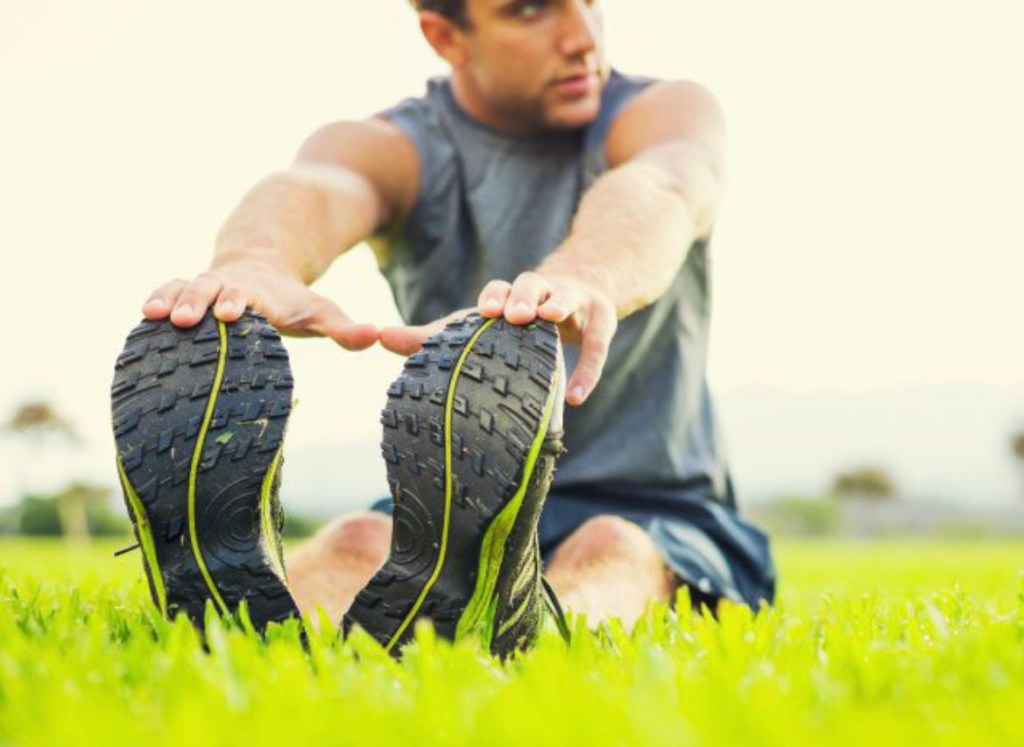
You’re not warming up properly.
If you want to feel your best to crush your workout, a quick treadmill jog just won’t cut it. Instead, do a series of dynamic stretches and activation drills to fire up your muscles, open up your joints, get your blood flowing, and prepare your nervous system for maximum performance.
You’re using your phone.
Real talk: If you’re checking your phone during your workout, then your workout ain’t hard enough. Either your breaks are too long or your intensity—sets, reps, or weight—is too low. (You should be too tired to check IG.)
You’re not getting help.
Need a spot? A gym partner? Someone to teach you good technique? Don’t be afraid to ask. Being too proud or “figuring it out yourself” is just asking for lousy results. After all, even the best athletes on earth all have (multiple) trainers.
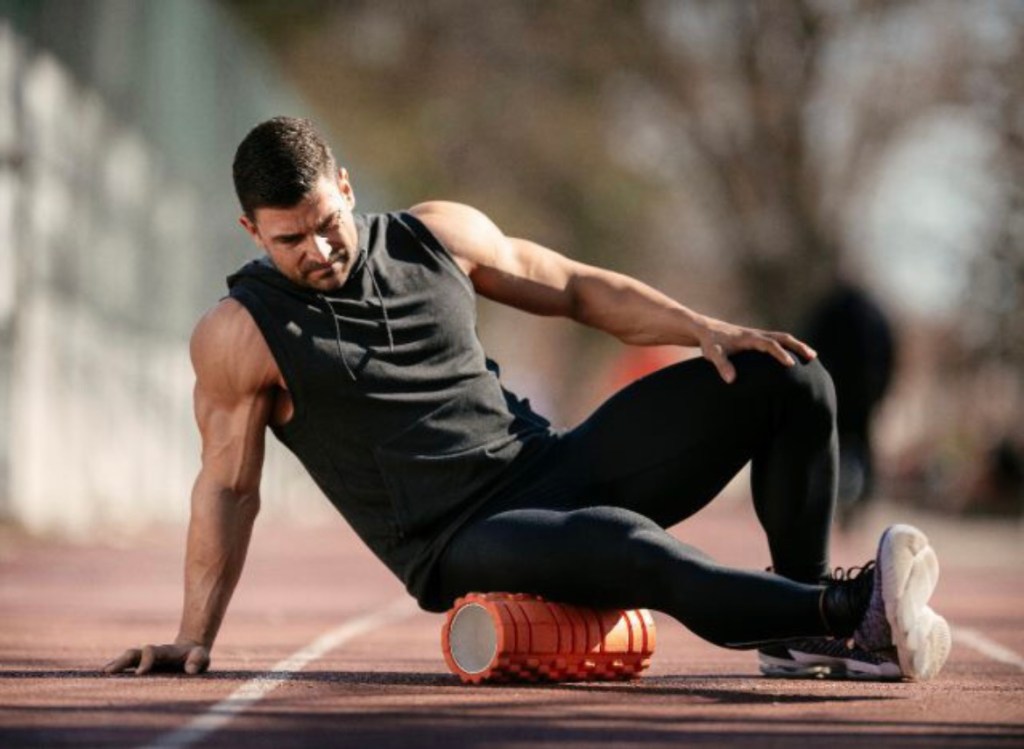
You’re not cooling down.
When you finish, don’t just pack up and leave—your heart rate is sky high and your energy is ramped up. Instead, do some gentle foam rolling and stretching on your tired muscles. Then, spend a minute or two just breathing gently to calm down and shift your mind into recovery mode.
You’re not getting the correct nutrition.
For great results, enhance your nutrition before, during, and after your workout. Beforehand, get quick-acting carbs and proteins with either a snack or shake. During your training, stay hydrated with water or a carb drink. (Avoid too much caffeine, which can cause “crashes” or affect your sleep.) Afterward, consume carbs and protein with a shake or meal to refuel and repair your body.
You’re not using the correct range of motion.
Always use the appropriate range of motion: You’ll build more strength, burn more calories, and help your joints. For example, if you don’t go low enough when squatting or bench pressing, you’ll put too much stress on your joints and fail to target the larger muscles in your hips and chest, respectively.
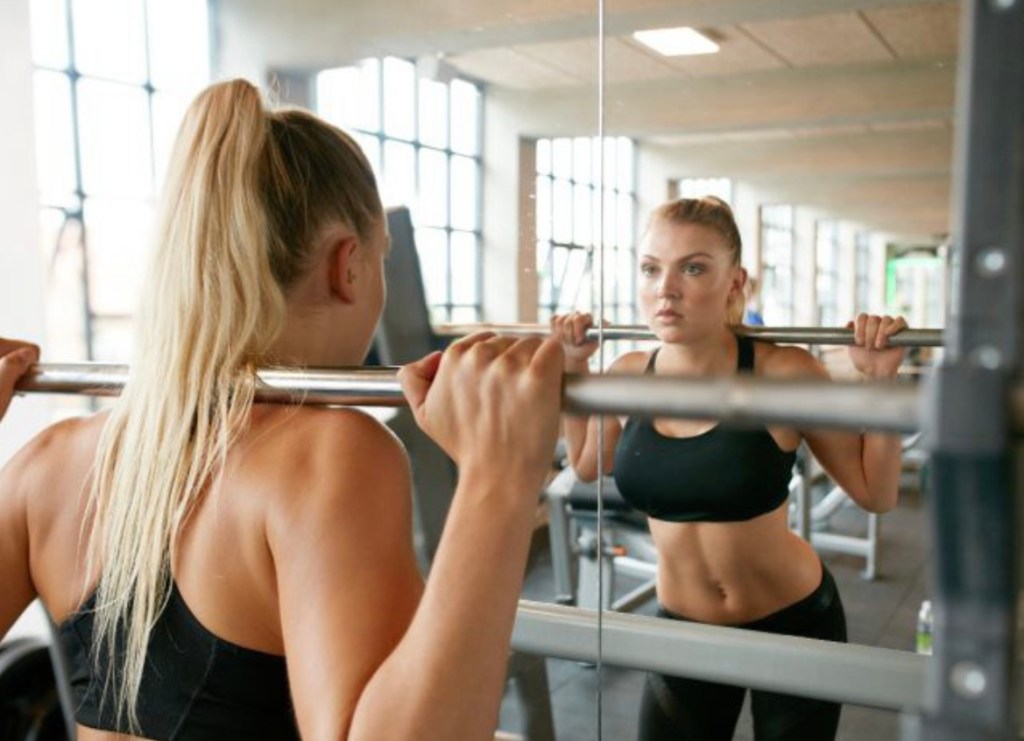
You’re looking in the mirror.
It might be tempting to look in the mirror to check your form, but you should actually avoid this. The mirror only shows you one plane and alters your neck position, which can affect your technique and even lead to injuries. Instead, have someone record a video from the front and/or side angle.
Push, pull, squat and lunge your way to a fitter, stronger body with our new series of weekly dumbbell workouts
Welcome to Week One of Your New Three-Day Full-Body Dumbbell Plan
This week’s three-day plan takes a full body AMRAP (As Many Reps As Possible) approach to each session, ensuring that key movement patterns and muscle groups, including your chest, shoulders, back, quads and hamstrings are hit across the course of the week. Each workout delivers a muscle-building, fitness-boosting, calorie-burning hit and leaves you with a trackable high score, which you can aim to beat in future sessions.
Day One (W1/D1)
After a thorough warm-up, grab your dumbbells, set a countdown timer for 30 minutes and work your way through as many high-quality rounds of the following circuit as possible. Rest as necessary to keep your form on point, but push yourself hard if you want to see results.
At the end of each round, make a note of how many reps you performed for each movement, creating a running tally for the entire workout.
1. Dumbbell Floor (or bench) Press x 10-15 reps
Lay flat on your back with your knees bent and your feet flat on the ground. Press the weights above you, locking out your elbows (A). Lower them slowly until your upper arms are resting on the floor (B), close to your body, pause here before explosively pressing back up. If you have a bench, use it.
2. Bent-over Row x 10- 15 reps
After your final floor press, stand tall with your dumbbells at your sides. Hinge forward until your torso is almost parallel to the ground and allow the dumbbells to hang just below your knees (A). Maintaining a flat back, row both dumbbells towards your hips (B), squeeze your shoulder blades together and lower under control to the start before repeating.
3. Front Squat x 15-20 reps
Clean your dumbbells onto the front of your shoulders (A). From here, drop into a front squat, by pushing your hips back and bending at the knees until your thighs pass parallel to the ground (B), before driving back up explosively. Keep those dumbbells secured high, with a strong, upright torso throughout.
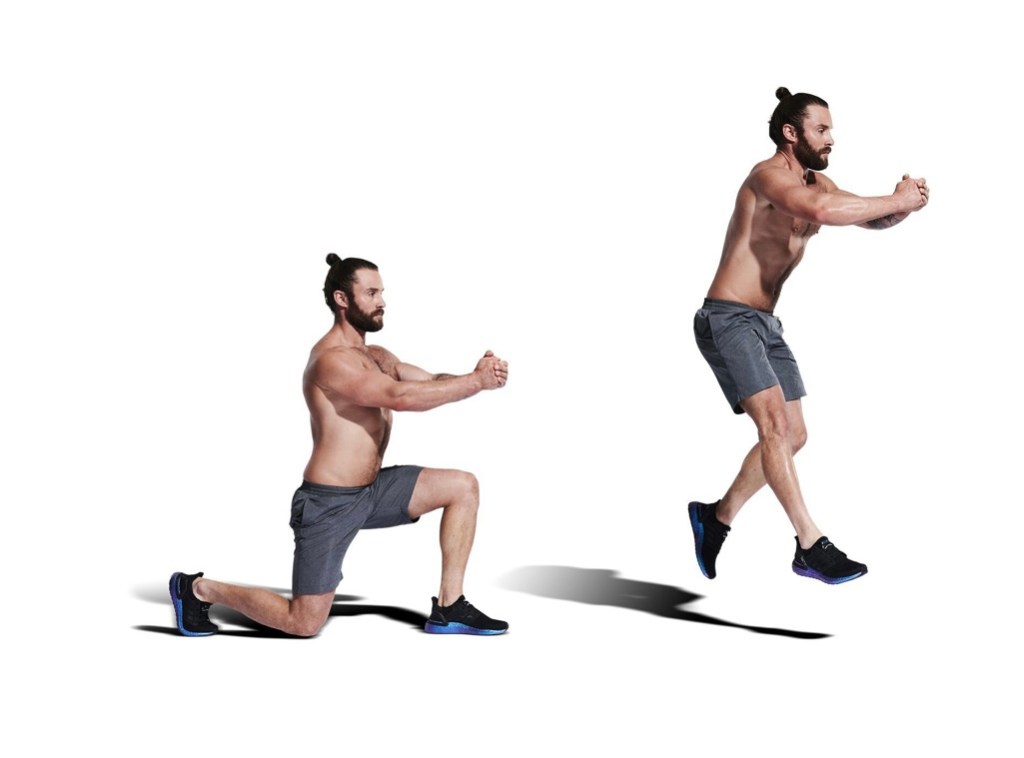
4. Split Squat Jump x 20 reps (total)
Step one foot backward and sink into a deep lunge, with your rear knee lightly touching the floor (A). Explode upward, jumping into the air and switching legs mid jump (B) to land in a lunge position with the opposite leg forward. Repeat the movement, alternating legs each rep. Keep this movement as fast paced as possible, focussing on maximising the height of each jump.
Day Two (W1/D2)
As with day one, perform a thorough warm-up and work your way through as many rounds as possible in 30 minutes, recording your efforts for each movement.
1. Push Press x 8-12 reps
Clean your dumbbells onto your shoulders, palms facing in. Take a breath and create tension in your core. (A) Dip at the knees and use your legs to help (B) press your dumbbells overhead. Lower with a controlled tempo to your shoulders and repeat. If your weights feel a little too light, don’t use any drive from the legs and focus on a strict press from the shoulders.
2. High Pull x 8-12 reps
Stand tall with your dumbbells at your waist, in front of your body. (A) Keeping your core tight, hinge forward slightly before explosively standing back upright and pulling the dumbbells up towards your chin, driving your elbows up and back (B). Slowly lower back down to your waist under complete control. Avoid simply ‘dropping’ your dumbbells back to your waist to build more muscle and avoid injury. If your dumbbells feel light, avoid the help from your hips and simply stand tall and pull the weights up to your chin.
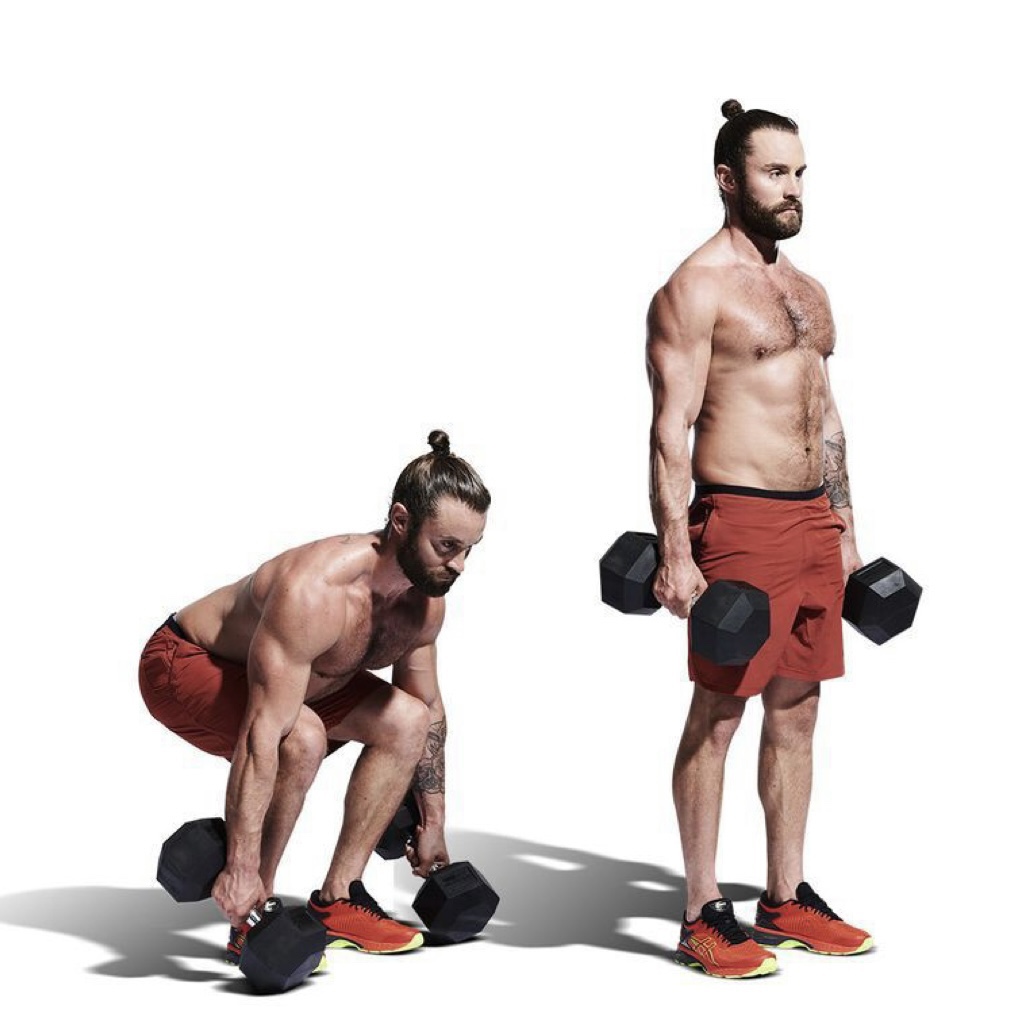
3. Dumbbell Deadlift x 10-15 reps
With your dumbbells on the floor just outside of your feet, hinge down and grip them with a flat back and neutral spine (A). Engage your lats and stand upright, pushing the ground away with your feet, keeping your chest up and your black flat throughout (B). Lower them back to the ground in a hinging motion and repeat. Avoid excessive rounding in your lower back, keeping your form tight throughout. Don’t rush, in a race to build muscle, slower and steady wins.
4. Jump Squats x 20
Lean slightly forward as you squat (A), then explode up, jumping as high as you can (B). Cushion your landing with bent legs, then sink immediately back into another squat and repeat. Aim for the maximum possible height you can achieve on each and every rep, even if that means pausing for a quick breath. We’re looking to produce power here, not simply go through the motions.
Day Three (W1/D3)
As with day one and two, perform a thorough warm-up and work your way through as many rounds as possible in 30 minutes, recording your efforts for each movement.
1. Press-up on Dumbbells x 10
After your final press drop your bells and assume a long-arm plank position. With your core tight and hands below your shoulders stacked on top of your dumbbells (A), bend your elbows to bring your chest to the floor (B). Keep your elbows close to your body as you push back up explosively.
2. Renegade Row x 10 (each side/ 20 total)
15 press-ups in the book, keep your hands on your bells and midline tight (A). Shifting your weight onto your left hand, row the right dumbbell towards your hip (B). Pause briefly, then lower the weight under control. Repeat on your left side (each row equals one rep).
3. Tempo Goblet Squats x 10
Hold a single dumbbell close to your chest (A). Sink your hips back and slowly over a count of four seconds descend into a squat (B). Your elbows should come in between your knees at the bottom. Drive back up explosively. Repeat. Pay attention to that tempo, it matters.
4. Burpee Over ‘bells x 10
With both dumbbells on the floor next to you, step back and hit the deck into a press-up position. Lower your body until your chest touches the floor (A). Stand back up and jump powerfully over the dumbbells (B) – driving through your hips when you take off. Land and immediately drop to the floor and repeat. The dumbbells keep you accountable for the height of each jump.















 Coaching By Kevin