Flexible Dieting

flexibleI do not know where you currently stand with your fitness and nutrition journey. You may be a weight room veteran or you may have just signed up for your first gym membership yesterday. Whether you run marathons, power lift, body build, cross-train, play a professional sport, or take group exercise classes, we all have the following in common:

1) We all need to properly and adequately fuel our active lifestyles through intelligent and effective nutrition practices.

2) Most of us want to look good naked and desire a body fat percentage well below “average”. 

3) We all like to feel energetic, strong, and healthy

There are several ways to achieve all of these objectives at once; however, after 10 years in the fitness industry & thousands of clients I’ve come to believe that there is one method of nutrition truly trumps all others. That method is flexible dieting.

There are a few different definitions of flexible dieting, and I want to immediately clear something up: flexible dieting is not the same as a dietary free-for-all where you are encouraged to eat anything “if it fits your macros”. IIFYM is a trend that is essentially a very misconstrued form of flexible dieting. People take it way too literally, and because of this unfortunate misrepresentation, there is a common misconception that flexible dieters live solely on junk food. Being flexible with your eating does mean you get to eat like an 8-year-old for the rest of your days. And while I don’t believe in depriving ourselves of the food we love, nobody can live on doughnuts alone, and eating too many (even if they fit your macros) will result in some negative side effects. Armi Legge has provided a pretty solid notion of what flexible dieting truly is:

“Flexible dieting is about eating a diet you can maintain and enjoy, while keeping the body you want. Flexible dieting is not about counting calories or macronutrients. It’s not about eating tons of junk food and hoping for the best. It’s about finding the simplest, most effective ways to get the body you want with as little effort and anxiety as possible.”

Fitness and nutrition go hand in hand. Fitness is not a temporary thing, nutrition shouldn’t be, either. You have to be active and train year-round, thus you need to have your nutrition in check year-round, as well. You need to go into this with the realization that this may likely amount to a complete lifestyle overhaul. Moreover, these changes need to be lasting. I think you will see that by getting your nutrition on point, you will experience a massive breakthrough with your training. You will be adequately fueled and ready to take on even the most grueling days.

I want you to come up with two goals-one primary, the other contingent-before you get underway:

1) How many pounds do want to lose from your frame?
2) How many pounds do you want to add to your back squat, in 12 weeks time?

Even if you don’t even lift (bro), feel free to substitute an endurance, or mobility related goal. The point is, make it measurable, and make it matter to your overall health and well-being.

An athlete’s body is a byproduct of their training. The efficacy of their training is a byproduct of their nutritional habits. One can’t perform adequately without enough of the right foods at the right times. By introducing flexible dieting into performance sports, we can optimize performance by introducing a unique and tailored amount of protein, carbohydrate, and fat to the individual athlete. When you eat to perform, you perform pretty damn well, and it shows from both an athletic and aesthetic standpoint.

Click here to download the guide on how to calculate your macros: Flexible Diet.

Now that you have roughly calculated your caloric baseline, you have two options to choose from: 1. Verify your baseline by eating at maintenance for a couple weeks. 2. Dive straight into eating a deficit (or surplus). If this is your first foray into flexible dieting, I suggest Option 1. Try it out for two weeks, and if your weight remains stable, you’ve likely found an accurate caloric baseline.

It’s important that you don’t skip this step in your zeal to start losing weight. It is less costly to take two weeks and verify your caloric baseline, than it is to find out a month later that you’ve been eating at too small (or large) a deficit, at which point you’ll have to start back at step one.


Note:  Deciding on the overall amount of calories you will consume on a daily basis (Your TDEE) can be worked out with a simple activity multiplier.

11: Appropriate for individuals who are virtually sedentary.

12: Appropriate for individuals who train less than 5 hours a week

13: Appropriate for individuals who train 5-10 hours a week. Most people will fall into this (or the previous) category.

14: Appropriate for individuals who train 10-15 hours a week, either as longer sessions done 5-6 days a week.

15: Appropriate for individuals who train 15-20 hours a week

16: Appropriate for individuals who train over 20 hours a week for their particular sport.

Or go to: http://www.flexible-diet.co.uk/ for their Flexible Diet macro calculator.

This Is the Best Workout For Losing Weight.

If you’re trying to lose weight, eating a healthy, portion-controlled diet that creates a calorie deficit is absolutely key — it may even be more important than working out. But if you’re eating right, adding exercise into your routine can absolutely burn extra calories and speed up the process. So which workout should you be doing?

To maximize your exercise time, we asked fitness instructor John Kersbergen what the best workout for weight loss is, and the answer may surprise you. It’s not tons and tons of calorie-burning, steady-state cardio like running straight for an hour. He said, “The most efficient way to get results is to do some form of high-intensity interval training (HIIT) for a total-body workout and to focus on strength training certain body parts (upper body, lower body, core) on different days of the week.” And no need to suffer for hours at the gym. John said, “The whole workout including warmup doesn’t need to be more than 45 minutes to be effective.” And three to four times a week is enough.

Here’s an example of a week’s worth of workouts.

Monday: total-body HIIT + lower body
Tuesday: total-body HIIT + upper body
Wednesday: rest
Thursday: total-body HIIT + abs and back
Friday: total-body HIIT + whatever else you want to focus on for your goals
Saturday: rest
Sunday: active rest such as going for an easy hike or yoga

For HIIT, basically you follow a work-to-rest ratio, and a popular one is 2:1. That could be 40 seconds of working at 70 to 90 percent of your max followed by 20 seconds of rest. An example of HIIT could be running, biking, jumping rope, rowing, or swimming with sprint or hill intervals included, and/or a mix of strength-training moves like burpees, squats, plyometrics exercises like jumping lunges, or push-ups.

Here are some HIIT workouts to give you some ideas.

Make sure your HIIT workout includes strength training, so don’t just do a 45-minute running interval workout and call it a day. Bodyweight exercises could be enough — like squats, for example — but adding weights will get results faster, like doing goblet squats holding a kettlebell.

John said, “Get as much work done in as short amount of time, each time, with mostly total-body compound movements that recruit more muscles and burn more calories.” So instead of just standing while doing bicep curls, couple it with a wide squat. Other examples of effective strength-training moves include squat variations like jumping squats, weighted squats, and dumbbell thrusters, as well as deadlifts, weighted step-ups, push-ups, pull-ups, and plank variations such as up-down planks and side planks with leg lifts.

Each total-body HIIT workout should work multiple muscle groups, so it’s not like Monday will be the only day you work your legs. But focusing on one part of the body on a specific day is an opportunity to add weight or reps so you can gradually increase your strength and endurance for those muscles. It’s also a chance to give certain parts of the body time to rest and repair, which will build muscle faster and prevent injury.

If weight loss is your goal, this should be great news! No more forcing yourself to do hours upon hours of boring cardio. If you’re new to HIIT, start with 10 minutes of short bursts of intense, heart-pumping intervals and muscle-burning strength-training moves. Then work your way up to 45-minute workouts three to four times a week. Mix up the exercises you do, the body parts you work, the equipment you use, and the order you do the exercises. It’ll keep your muscles guessing, prevent boredom, and build the most muscle, which will help burn the most fat. Most importantly, it’ll keep you inspired to work out, so you’ll be consistent with your weekly workouts, which is the key to seeing results and reaching your goal.

Image Source: POPSUGAR Photography / Rima Brindamour


Why You Aren’t Seeing Results.

A Trainer Gets Brutally Honest About Why You Aren’t Seeing Results

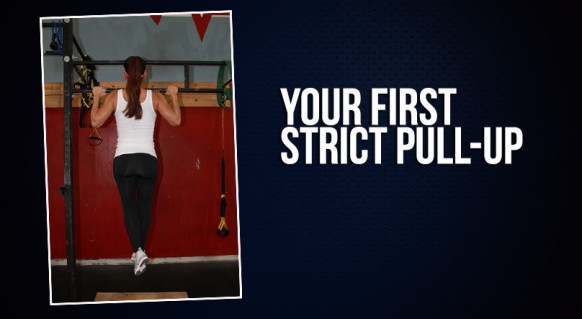
CONQUERING YOUR FIRST STRICT PULL-UP

By Adam Sayih

your-first-strict-pull_up-582x319

Ah, the good ol’ strict pull-up. Nothing like having to elevate your entire body weight! Some people have no problem banging out strict pull-ups. However, a large population of CrossFitters see the word “pull-up” and are instantly defeated by what seems to be a mythical accomplishment.

Women in particular have a very difficult time conquering their first strict pull-up. Since the pull-up isn’t very technical, it’s mostly due to a lack of strength, not skill, that holds women back.

The Banded Pull-up Paradox
Most CrossFit boxes have no issues in allowing athletes to throw bands on the bar to use as an acceptable scaling for pull-ups. While this is OK for WODs, it doesn’t help much for developing pure pull-up strength. We all know that one person who has been using the same thick green band for the last two years. Heck, it might even be you. There are several problems with using bands:

Bands take off nearly the entire load of the bottom portion of the pull-up (from extended arms to half-way up). The bottom half is the most difficult part of the pull-up, therefore using bands all the time will never strengthen this portion of the repetition.

Bands are elastic, therefore causing you to accelerate throughout the lift. There is very little resistance from the bottom half of the rep, but momentum is generated as you move up from the bottom. The end result is a very low amount of force production done by the muscles, so very little “strengthening” is actually happening.
Bands often lead to weird banded kipping pull-ups. They aren’t exactly kipping pull-ups, but some sort of hybrid child of the kipping pull-up that works. While this may be acceptable in WOD standards, it isn’t doing much to help you achieve a strict pull-up.

Often a band is either too easy or too hard, so strengthening the pull-up requires strength work outside of the regularly scheduled WOD.

Conquering the Pull-up
The pull-up requires a dedicated strength plan. Waiting for the word ‘pull-up’ to appear every once in a while on the whiteboard isn’t going to cut it. You need a dedicated plan that will simulate actual pull-ups and strengthen the muscles in that specific movement pattern. In my experience with clients and athletes, getting your first pull-up is as simple as periodizing four exercises and just requires hard work and patience.Accountability is key. Most people know they have weaknesses but don’t know how to address the issue.

The Dead Hang
How to do it
Find a bar and just hang as long as you can!

Why it works
You might be surprised but this exercise will really test your grip strength. If you can’t perform a strict pull-up there’s a strong chance you can’t hang on a bar for more than 30 seconds either. Having a weak grip is a contributor to pull-up weaknesses. The stronger your grip is, the greater your work capacity to perform pull-ups.

The Ring Row
The Ring Row_Pull upHow to do it
Set up rings to a height that is roughly at the hip. Hold on to the rings and slowly lean back until your arms are fully extended and your torso and legs are straight. Pull on the rings until your hands reach your chest. Do not use your hips to assist you. The stronger you are, the lower you can set the rings and bring your torso to the ground.

Why it works
The ring row is a basic back strengthening exercise. If the other movements are still too difficult, even after adjusting to easier levels, stick with ring rows for a while. A study in the International Journal of Industrial Ergonomics revealed that most pulling strength is exerted when the arms are 90 degrees to the sagittal plane (a vertical plane which passes from front to rear, dividing the body into right and left halves), which means this a great exercise for beginners to start developing pulling strength.

The Segmented & Eccentric Pull-up
How to do itthe segment and eccentric pull up
The name is a little crazy, but it’s the best way to describe what you’re doing. You’ll start on a box set up to a height where you can perform a pull-up. The great part about this set-up is that it can be adjusted to any strength level. If you’re very weak, you might have to stack some plates on the box so that you’re closer to the bar (you can even be just a few inches from the bar if needed). If you’re close to your first pull-up, you’ll be setting up a height that is a lot lower.
The reason it’s called a segmented pull-up is because this height will be referred to as a segment of the repetition. For example, if you are starting your pull-up on a height where your arms are bent 90 degrees, this is a half-rep segment.

Now that you have the set-up, it’s time to do some work. Pull yourself over the bar from this position. The next step is lowering your body down in a slow and controlled manner to a complete dead hang. You’ll have to pull your feet back to avoid hitting the box. A common mistake is people who lower themselves slowly to about halfway, hold it, then drop fast. You must lower yourself slowly throughout the entire range of motion to develop bottom half strength.

Why it works
This is known as eccentric-enhanced training. What we’re really doing is overloading the eccentric phase of the pull-up, which is the going down portion. Since you’ve never performed a pull-up before, you’ve never experienced that much resistance loading on the back muscles. A study done by the Journal of Strength and Conditioning concluded that eccentric-enhanced training results in an increase in concentric power. The researchers believe that since a heavier than normal load is applied to the muscles, an increase in muscle tension and cross-bridging of fibers occurs. Another benefit of eccentric enhanced training is that it strengthens tendons. This is especially important if you plan on performing kipping and other gymnastic exercises in the future.

The Barbell Assisted Pull-up
How to do itthe barbell assisted pull up
Set up a box a few feet away from a rack. Then set up a barbell on the rack. How high you set the barbell is determined by your strength level. The weaker you are, the higher you will set the barbell so more weight is distributed to the box. Hold on to the barbell with a pull-up grip and put your feet on the box. While keeping a vertical torso, pull your chin over the bar as you would a pull-up. It’s very important not to use your hips to kip up. Always descend to fully extended arms and make sure the barbell is set to a height where your butt is not on the ground.

Why it works
The barbell assisted pull-up is the most underrated exercise out there for those who can’t perform a pull-up. If someone can’t perform a push-up, we almost always recommend performing push-ups on the knees to remove some of the bodyweight. This exercise is essentially the same concept. You’re literally performing pull-ups with less bodyweight, but without any elastic momentum from a band. This allows you to produce force in the required muscles in a full range of motion-which is vital in the pull-up.

The Program:Putting it All Together
Perform these exercises before a WOD. We’re using Monday, Wednesday, and Friday as examples, however you can use any days you choose, given there is at least one day in between to recover.

Monday
The Segment+Eccentric Pull-up
5 sets of 4 repetitions. Take 3-5 seconds to descend to a dead hang. Rest 90-120 seconds between sets. We’re working on strength here, no need to rush.

The Barbell Assisted Pull-up
3 sets of 6 repetitions. Rest 90-120 seconds between sets.

Wednesday
Ring Rows
4 sets of 8 repetitions. Rest 90 seconds between sets.

Dead Hang
3 sets to failure. Just when you think you can’t hold on any longer, count to 15! Rest as needed.

Friday
The Segment+Eccentric Pull-up
5 sets of 3 repetitions. Take 5 seconds to descend to a dead hang. Rest 90-120 seconds between sets.

The Barbell Assisted Pull-up
3 sets of 5 repetitions. Rest 90-120 seconds between sets.
1 set to absolute failure.

How to Progress
Progress pull upProgressing is simple. Every week, make small advances to continually challenge the muscles. For the Segmented+Eccentric Pull-up, lower the starting height. For example, if you started at a height on a box with three 10lb plates, remove one plate the following week. For the Barbell Assisted Pull-up, lower the barbell rack height. If you are already as low as possible without your butt touching the floor, start adding weight to your lap in the form of plates or kettlebells. For the dead hang, just hold on longer. For the ring rows, adjust your feet so your body angle is lower. Repeat this program as long as it takes to get a strict pull-up!
5 Reasons Running May Not Help You Lose Weight

By Adam Bornstein

does-running-help-you-lose-weight

“My body just can’t lose weight.” That’s the first thing I heard when I picked up the phone. Sounding frustrated and hopeless on the other end of the line, my client Sarah continued. “If you knew how hard I’ve been working, you’d understand. You’d know I wasn’t making excuses.”

Sarah first contacted me after a friend of hers had successfully lost weight through my online coaching program, just six months after having a baby. I asked her to keep an open mind and walk me through everything she’d been doing in terms of diet and exercise. The problem was immediately clear: Sarah was putting in effort, but the type of effort—specifically her over-reliance on running for weight loss—wasn’t the best way to lose fat and get the results she wanted.

Once Sarah understood why her approach to cardio was holding her back, we adjusted her plan and the pounds starting coming off again (seven pounds in one month, to be exact.) So to make sure your cardio training isn’t the reason your jeans don’t fit better (despite spending plenty of time in the gym), here are five common mistakes, plus simple solutions to get back on track.

Running for Weight Loss Mistake No. 1: Your Workout Is Always the Same

Your body is an amazing machine. It’s designed for efficiency, meaning if you do the same thing over and over again, the process becomes easier. This applies to your running workouts too. Not only will they start to feel more effortless (even if you’re still sweating and pumping your legs), but your metabolism literally learns and reacts so that fewer calories are burned with the same exercise output.

This is where traditional “steady state” running falls short on a long-term weight-loss plan. Research conducted at the University of Tampa found that doing steady state cardio—such as running on the treadmill for 45 minutes at a consistent pace that’s not near maximal effort (think sprinting)—helps out with weight loss… but only initially. Subjects lost a few pounds during the first week and then kaput! Nothing more. The reason? Within one week, their metabolism had adjusted and now didn’t need to work as hard to burn off the fat.

One of the biggest problems with running at a steady, moderate-intensity pace, is that the calories you burn are limited to the time you spend sweating. So once your body adapts, the benefit is limited. That’s why weight training is oftentimes viewed as better than “just” running for fat loss. Lifting weights impacts your metabolism by causing mini-micro tears that need to be repaired. That healing process requires energy, which means you’re burning more calories—a process that can sometimes last for nearly two days after your training session.

To put it more simply: With cardio, you can slog away for 30 minutes at a lower intensity and burn 200 calories—or you can just eat 200 fewer calories per day. It’s the same thing. With weight training (or as you’ll soon find out—sprints), that’s not the case. The calories you burn are not limited to what you do in the gym. So while a little variety might not seem like a big change to your routine, it will have a dramatic impact on transforming your body.

Running for Weight Loss Mistake No. 2: You Go Longer, But Not Faster

One of the most important variables with any type of exercise—cardio or other—is intensity. If you look at the average person who runs, they pick a pace that they can maintain for a long duration. Think about it: When you jump on a treadmill, elliptical, or bike, you’re starting with the intent to be on there for a while. Whether it’s 30 minutes or an hour, your goal is to push at a pace you can sustain, work hard, feel tired, and then go home. While this is great for endurance, it’s not so great for fat loss.

A study in the Journal of the American Medical Association followed the exercise habits of more than 34,000 women and concluded that it took about an hour a day of moderate exercise (walking at 3mph) to maintain weight. Notice, that’s not weight loss. And three miles per hour is not very fast.

Now imagine if instead of arbitrarily picking an amount of time to exercise, you focused on pushing yourself to certain level of difficulty. If the 3.0 on a treadmill would be a “four” on a difficulty scale of one to 10, what would happen if you pushed yourself at an eight or nine for a shorter period of time?

There’s no need to guess, I’ll tell you: More fat loss. Researchers at the University of Western Ontario compared short but intense exercise to long, less-intense cardio. One group performed four to six 30-second “sprints” while the other group did cardio for 30 to 60 minutes. The results were nothing short of amazing. Despite exercising for a fraction of the time, those in the sprint category burned more than twice as much body fat.

That’s because the process of sprinting causes similar internal changes to your body as those that occur during weight training. Your body needs to replenish it’s ATP (energy), convert lactic acid that’s produced during exercise into glucose, and restore your blood hormone levels after an intense workout. All of those processes mean your body works harder and burns more fat—both of which don’t happen during steady-state aerobics.

Running for Weight Loss Mistake No. 3: You Focus too Much on Calories Burned

One of the most common weight-loss mistakes is believing that the majority of the calories you burn results from exercise. This is a dangerous misunderstanding. Simply being alive—sleeping, standing, eating, thinking—requires a tremendous amount of energy. The number of calories you burn at the gym actually pales in comparison to normal functioning and your daily activities that are not exercise based.

Does that mean there’s no need to hit the gym? Of course not. Exercise has many health benefits, but the type of exercise you perform in the gym will influence how many calories you burn outside of it. Running will burn calories, but sprinting or lifting weights will result in more muscle. And the more muscle you have on your body (no—not the “bulky” muscle of bodybuilders), the more calories your body burns just functioning.

Running for Weight Loss Mistake No. 4: You Don’t Try Other Forms of Cardio

Now that you know muscle is important to your overall weight-loss goals, it only makes sense that you would want to do the type of training that helps this happen in the least amount of time. So if you’re a lover of slower, longer duration cardio, I have some bad news: “Endurance” running and walking (longer duration, lower intensity) impairs strength and muscle growth, according to research in the Journal of Strength and Conditioning Research. What’s more, even if you increase the intensity and run on an incline, cycling is still better for gaining muscle and burning fat, researchers found.

Again, the point here is not that “running doesn’t work” or that there aren’t any benefits. However, if you’re looking for the most efficient weight loss strategy and are short on time, you might be better served by cycling (preferably at a high intensity), rather than going for a long walk or relying on jogging to lose weight.

Running for Weight Loss Mistake No. 5: You Run Too Much (Yes, Too Much!)

This might sound crazy, but just hang with me: The number on the scale might not be changing because you’re running too much. While this isn’t a problem for the majority of people struggling to drop a few pounds, I’ve worked with more than a few people—and seen hundreds of other case studies—where fat loss has been stunted by doing too much.

Exercise is an indisputable component of a healthy life, but it’s still stress on your body. And the demands of that stress impact your hormones, which also control your ability to lose fat. More specifically, the hormone cortisol is released when you exercise. All cortisol is not bad (despite what late-night TV and supplement ads might have you believe), but chronic stress and chronic cortisol can lead to insulin resistance which forces you to store belly fat against your best-laid plans. Research published in the journal Hormone Research found that long distance running—like that done in endurance runners—causes a sustained increase in cortisol. And this increase in cortisol for long period of times can lead to more inflammation, slower recovery, breaking down your muscle tissue, building up fat, and even harm your immune functioning.

Just as bad, if you’re suffering from too much stress—whether it’s the result of exercises for too many hours or not recovering with the right nutrition—you can harm your thyroid and lower your metabolic rate, making weight loss more difficult.

If you’re doing an hour of cardio per day, that’s more than enough for fat loss. (Remember, this isn’t for endurance training.) If you start running two to four hours per day and aren’t losing weight (or maybe evening gaining), you might be best suited to reduce your running frequency, add some resistance training, and see what happens. Odds are, you’ll be pleasantly surprised.

http://www.shape.com/weight-loss/tips-plans/5-reasons-running-may-not-help-you-lose-weight

CrossFit-Inspired 200-Rep Bodyweight Workout

You don’t need heavy-duty barbells, a box, or a pull-up bar for this intense workout, but it’s still fast-paced, full-body, and intense. It’s just four basic moves, 10 reps each, repeated five times for a total of 200 reps. Aim to do this workout AQAP (as quickly as possible), finishing in under eight to 10 minutes, paying special attention to proper form.

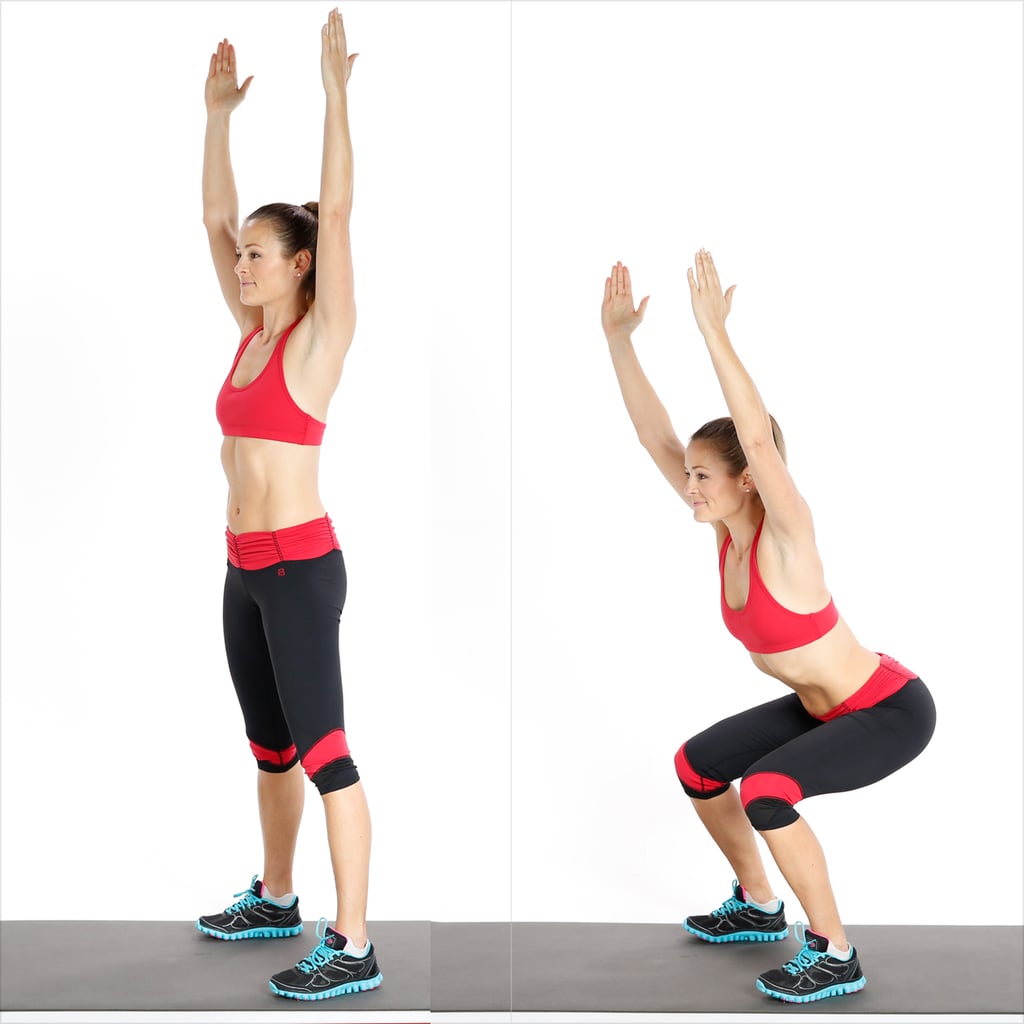
Squat With Overhead Reach

  • Begin with your feet slightly wider than hip’s width apart and toes pointed slightly outward. Raise your arms up until your upper arms are even with your ears. If this is too difficult, rest your hands on your hips.
  • Keeping weight in your heels, sit back into a deep squat. Make sure your knees do not go beyond your toes or roll in or out of alignment. Keep your abs engaged as you squat.
  • Deepen your abdominal engagement as you press through your heels to return to standing, completing one rep.
  • Do a total of 10 reps.

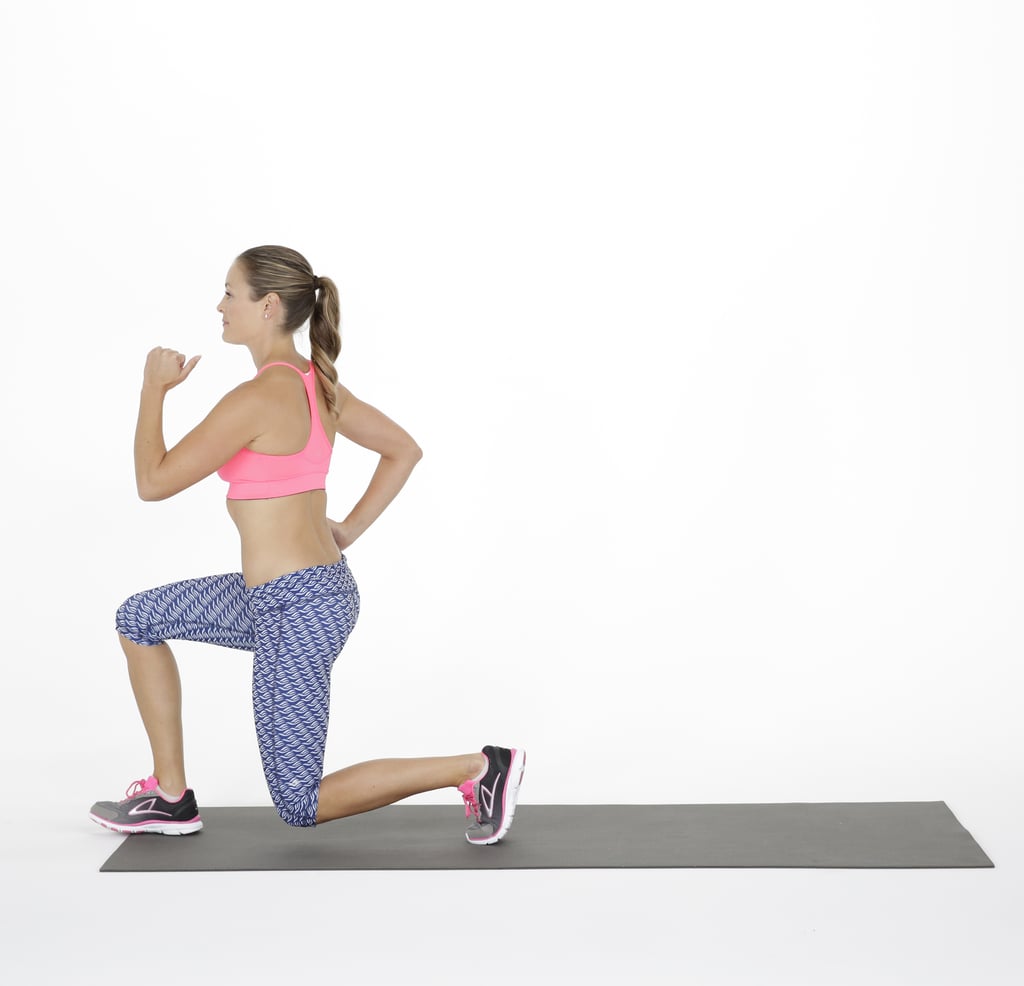
Alternating Forward Lunge

  • Stand tall with your feet hip’s width distance apart. Bend the elbows at your sides or rest your hands on the hips.
  • Step forward with the right foot, lowering your hips until both knees are bent at about a 90-degree angle. Keep the front knee directly above the ankle, and lower the left knee to just above the floor.
  • Keep the weight in your heels as you push back to the starting position, completing one rep.
  • Repeat stepping with the left foot this time, completing a second rep.
  • Keep alternating for a total of 10 reps.

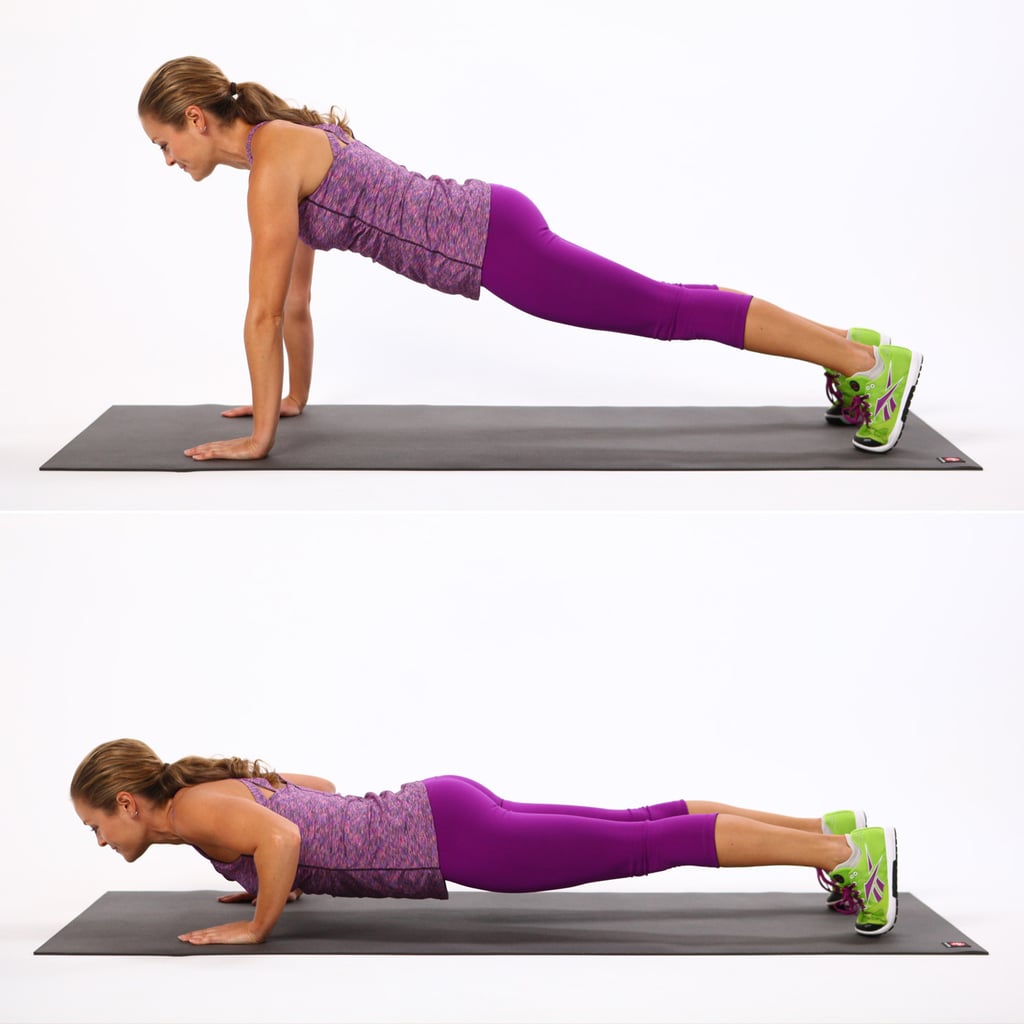
Basic Push-Up

  • Start in plank position with your arms and legs straight, shoulders above your wrists.
  • Bend your elbows and lower your chest to touch the ground. Then straighten the arms, moving the body up as one unit. This counts as one rep.
  • If this is too difficult, do this exercise with your knees on the floor [1].
  • Keep going for a total of 10 reps.

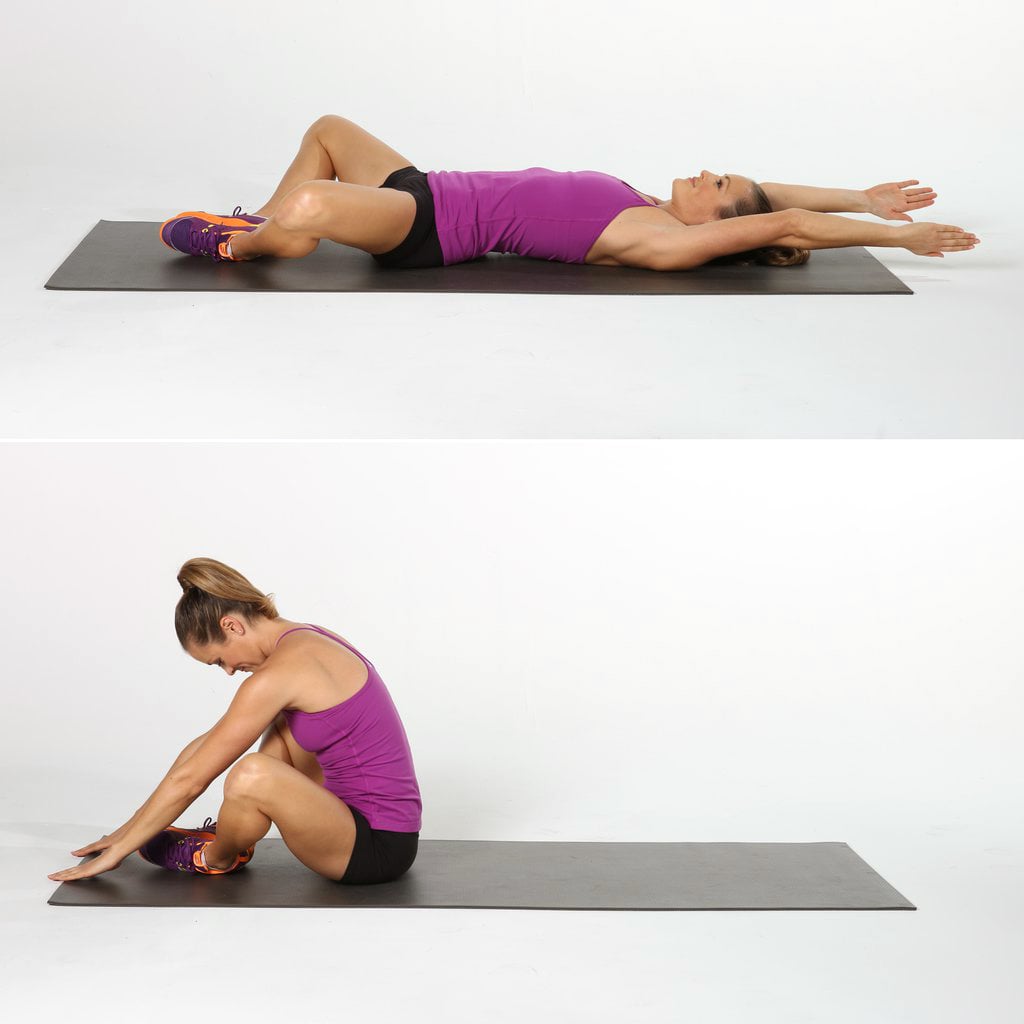
Diamond Sit-Up

  • Lie on your back and open your legs into a diamond shape (known as Butterfly pose in yoga), with the soles of your feet pressed together and knees out wide. Extend the arms overhead.
  • Curl the torso up, and tap the floor in front of your feet.
  • Slowly lower back to the starting position to finish off one rep.
  • Complete 10 reps.

Without a break, flow from one exercise to the next, repeating this 40-rep workout four more times for a total of 200 reps.


What to eat for breakfast to drop pounds

Nutritionists Reveal Exactly What to Eat For Breakfast to Drop Pounds

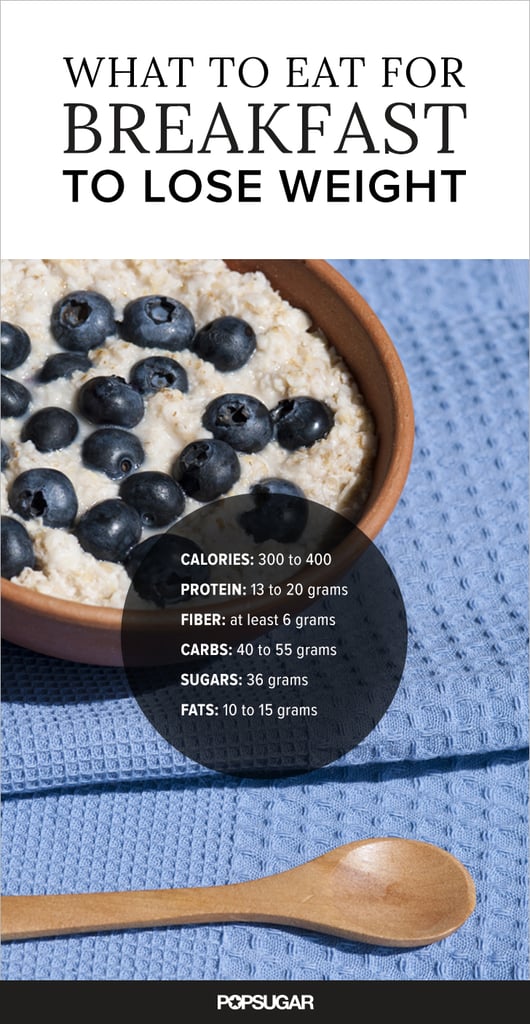
Did you know you can use the first meal of the day as a tool to lose weight? Want to know how? We’ve enlisted the expertise of two nutritionists — Stephanie Clarke, RD, and Willow Jarosh, RD, of C&J Nutrition [1] — to share the perfect equation for how to make a scrumptious and satisfying breakfast that will help you lose weight. Follow their advice below to start seeing results.

Calories

Aim for a range between 300 and 400 calories. If you’re trying to lose weight, stick with the 300 to 350 range, and if you’re trying to maintain weight, especially if you’re working out, shoot closer to 350 to 400 calories.

Carbs

About 45 to 55 percent of your breakfast calories should be devoted to carbs, which is about 40 to 55 grams of carbs. Skip sugary and overly processed foods or those made with enriched white flour, and choose whole grains, fruits, and veggies.

Protein

About 15 to 20 percent of your breakfast calorie amount should be protein, which works out to about 13 to 20 grams. Getting enough protein at breakfast is important for keeping you satisfied throughout the morning. And studies have shown that getting at least 20 grams of protein at breakfast may help you lose weight as well. Eggs, dairy products, soy milk, protein powder in smoothies, nuts and seeds, and whole grains are great sources of protein.

Fats

Shoot for about 10 to 15 grams, which is about 30 to 35 percent of your total breakfast calories. Instead of saturated fats like bacon and cheese, go for monounsaturated fats (MUFAs) like olive oil, nuts and seeds and the butters made from them, and avocado.

Fiber

Aim for about 25 percent of your recommended daily total of 25 grams per day. That works out to about six grams, but it’s OK to go above that, as long as it doesn’t bother your digestive system. Berries, pears, apples, greens and other veggies, nuts, seeds, and whole grains can help you reach that goal.

Sugars

If you follow the equation for carbs above, then you won’t have to worry about going overboard on sugars, especially if you’re eating a combination of foods like fruits, whole grains, and dairy products. But for a ballpark number to keep in mind, stick to 36 grams or fewer. And when it comes to added sugar, try not to exceed six grams — that’s about 1.5 teaspoons’ worth of any sweetener (white sugar, brown sugar, maple syrup, honey, or agave).

Timing

Ideally you should eat breakfast within 30 to 60 minutes of waking up. If you’re not keen on eating anything big first thing, split this meal up into two parts, having something light close to waking up and the other half about an hour and a half later. This also works well if you’re a morning exerciser and prefer not to have a full stomach while you work out. If you’re exercising, you can aim to have the more carbohydrate-based portion of your breakfast (fruit, toast, etc.) prior to working out and the more protein-centric portion afterward.

A Few Examples of Perfect Breakfasts

    • Steel Cut Oats With Fruit and Nuts: Steel cut oats not only have more fiber than an equal amount of rolled oats, but they also have more protein since you’re eating more of the original grain. Cook one-half cup steel cut oats in a mixture of one-half cup water and one-half cup unsweetened soy milk. Top with one-half cup blueberries, one tablespoon chopped walnuts, and one teaspoon drizzle of maple syrup.
      Calories: 328 [3]
      Total fat: 9.7 grams
      Saturated fat: 1 gram
      Carbs: 51.1 grams
      Fiber: 7.2 grams
      Sugars: 16.6 grams
      Protein: 11.8 grams

    • Mexi-Egg Wrap: Scramble one egg and one egg white with two tablespoons black beans, one-quarter cup chopped tomato, and two tablespoons onion, until eggs are set. Stir in one cup spinach. Fill a nine-inch whole-wheat tortilla with the egg mixture and top with one-quarter of an avocado, cubed, and one tablespoon salsa. Add salt, pepper, cumin, and chili powder to taste.
      Calories: 345 [4]
      Total fat: 15.7 grams
      Saturated fat: 3.5 grams
      Carbs: 36.8 grams
      Fiber 9.7 grams
      Sugars: 3.2 grams
      Protein: 17.4 grams

  • Smoothie and a Hard-Boiled Egg: Pair a carrot cake smoothie [5] made with two medium carrots, half a frozen banana, two cups spinach, one cup unsweetened soy milk (you can use almond), half a scoop plant-based protein powder, one-eighth cup golden raisins, cinnamon, nutmeg, and cloves. This is easy to split — have half of the smoothie before your workout, then have the rest plus the egg after the workout.
    Calories: 368
    Total fat: 12.6 grams
    Saturated fat: 5.1 grams
    Carbs: 49.5 grams
    Fiber: 9.4 grams
    Sugars: 25.5 grams
    Protein: 25.4 grams

Breakfast Mistakes to Avoid

  • Skipping out: When you sleep, your body slows down while you’re not eating. So when you wake up, if you don’t break the fast (yup, that’s where the name comes from), your body will burn calories slowly. To jump-start your metabolism and get your body burning calories, you need to eat. Not fueling up also deprives your brain of glucose, which is why you feel foggy-headed and cranky. Think of breakfast as an opportunity to get your fill of valuable nutrients such as calcium, iron, and vitamin C.
  • Skimping: You know skipping breakfast entirely is a no-no, but not eating enough will also backfire. It’ll leave you feeling hungry soon after eating, which will cause you to need more food and can translate to more calories consumed over the course of the entire day. Stick to the formula above, and you’ll not only feel satisfied longer, but you’ll also have more energy for the workouts that can make you drop pounds even faster.
  • Imbalanced meal: Leaving out a key component of the breakfast formula such as avoiding all carbs or going too heavy, such as having an all-protein meal, means you’re not going to get enough satisfaction or nutrition from this first meal. Following the formula above will allow you to eat a balanced meal while also helping you see weight-loss results.

Looking to lose weight during other times of the day? Here’s what to eat for lunch [6], what to eat at snack time [7], and what to eat at dinner to lose weight [8].